Resource Center

The Transit Workforce Center is pleased to host a curated collection of publications and other materials to assist stakeholders engaged in transit workforce development. The Resource Center includes case studies, training materials, research reports, and other materials of interest, including publications produced by federal government agencies, transit organizations, and independent research entities. Resources may be filtered by topic, resource type, and transit mode. This TWC blog post explains how to use the Resource Center.

We are continuing to update the Resource Center regularly. Please contact us via the Request Help menu option if you would like assistance using the Resource Center or are looking for resources on a particular topic. We also welcome suggestions of topics or specific resources to add.

Content in external resources linked from the Resource Center is solely the responsibility of the resource authors and does not necessarily reflect the perspectives of or endorsement by the Transit Workforce Center.

Found 90 results for "mentor"
RESOURCE TYPE: | TRANSIT MODE:

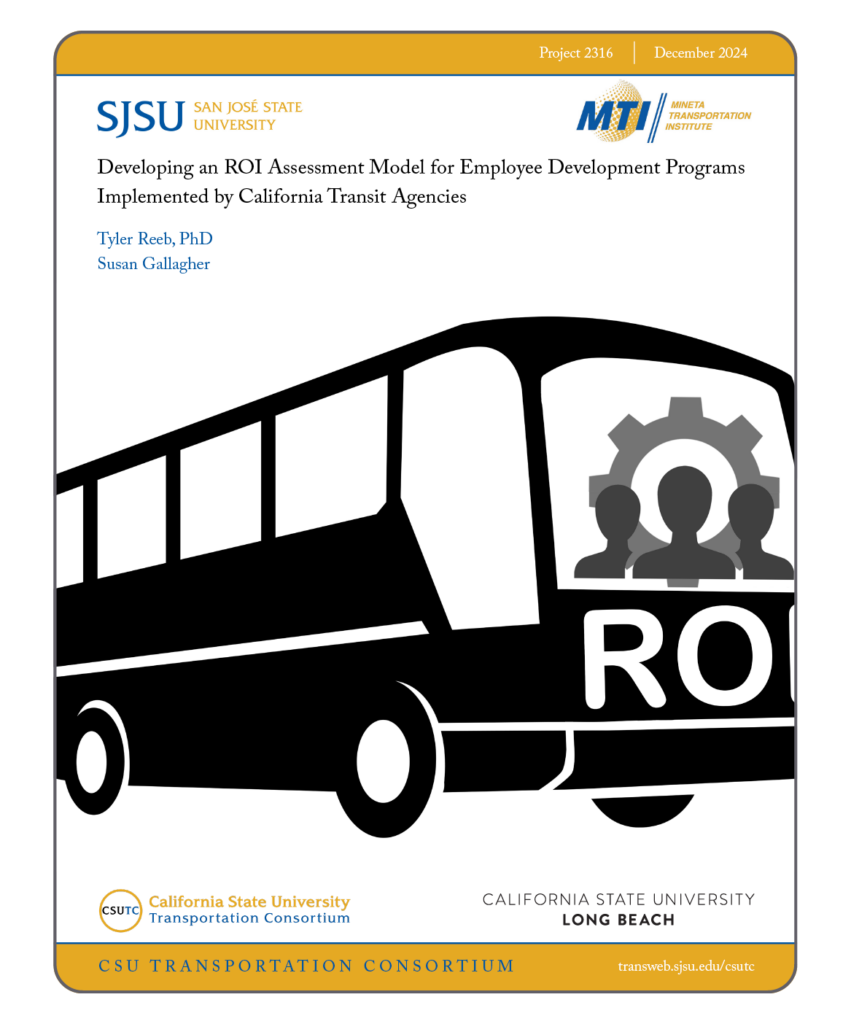
Developing an ROI Assessment Model for Employee Development Programs Implemented by California Transit Agencies

Though employee development programs improve recruitment, retention, and morale, transit agencies struggle to solicit adequate funding for these programs absent the ability to demonstrate their value to a broader audience. This report includes a literature review, survey, and follow-up interviews conducted by the MTI research team that found program outcome measures and programmatic expense data required for ROI assesment is similar across employee development programs but is not currently being uniformly collected across agencies. The research findings demonstrate the need for technical assistance to combat data collection challenges such as staff capacity and know-how.

Mineta Transportation Institute (MTI)

December 2024

LEARN MORE

Transit agencies will necessarily incur expenses in efforts to improve the recruitment, retention, and morale of employees, but will struggle to solicit adequate funding unless they are able to demonstrate the value of such efforts to a broader audience. Thus, developing and implementing ROI assessments is critical. The literature review, survey, and follow-up interviews conducted by the MTI research team found that program outcome measures and programmatic expense data required for ROI is similar across employee development programs but is not currently being uniformly collected across agencies. The research findings demonstrate the need for technical assistance to combat data collection challenges such as staff capacity and know-how.

LEARN MORE
RESOURCE TYPE: , | TRANSIT MODE:

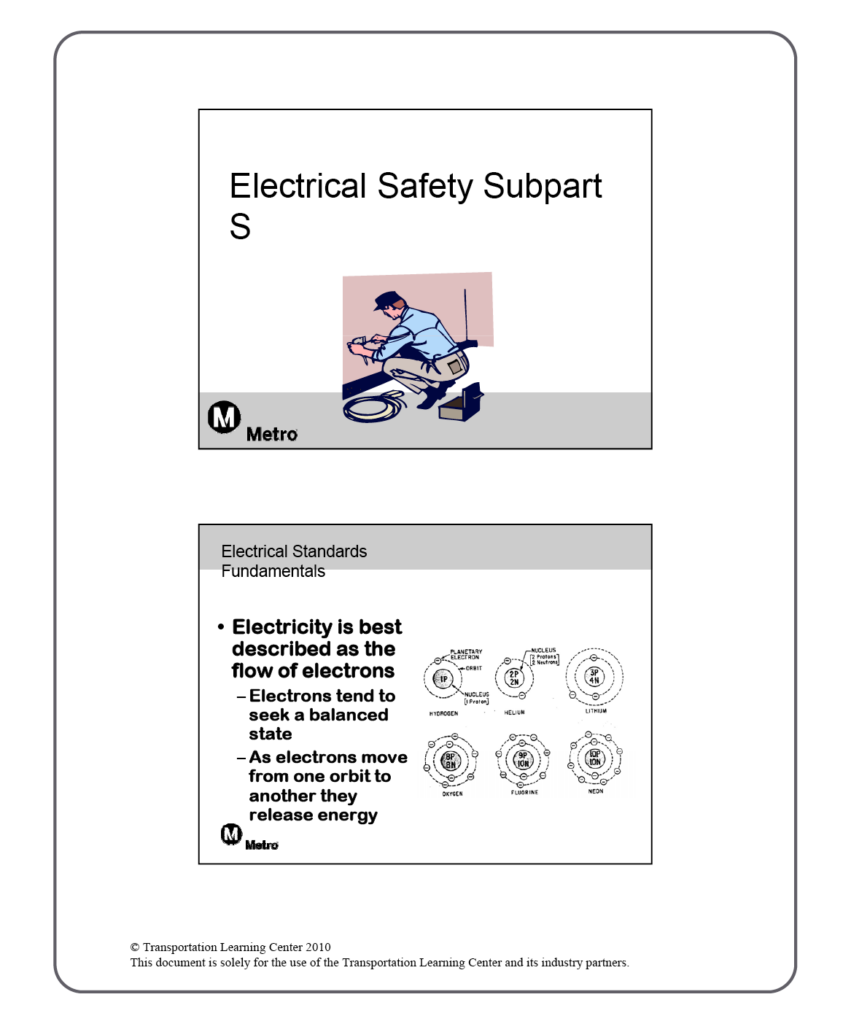
Electrical Standards Fundamentals

A document of electrical safety standards and fundamentals. The fundamentals include Electrons, Static Electricity, and Magnetic fields. It also covers how power is transmitted to buildings through the power grid and how grounding is built into delivery systems. This resource is intended only to provide an overview of fundamental principles – please see Terms & Conditions.

International Transportation Learning Center

January 2010

LEARN MORE
RESOURCE TYPE: | TRANSIT MODE: ,

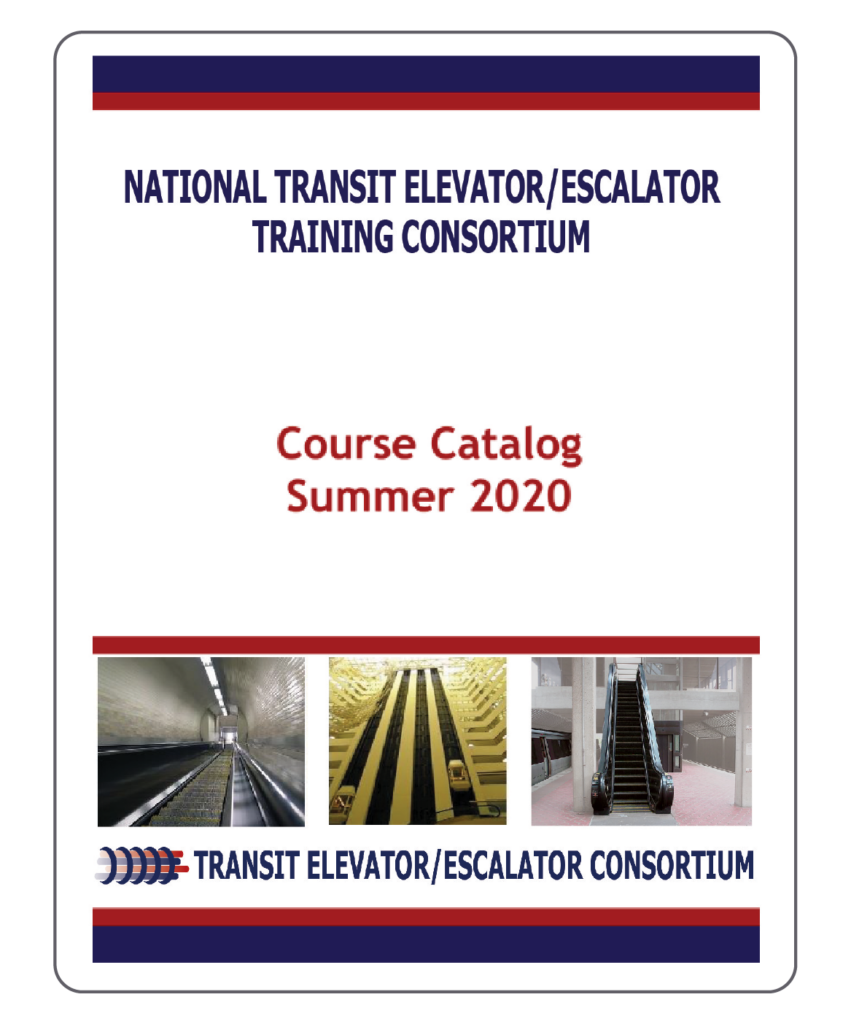
Elevator/Escalator Training Consortium

The International Transportation Learning Center (ITLC) organizes multiple national training consortia to develop standards-based national training courseware for frontline occupations in public transportation organizations. The Transit Elevator-Escalator Training Consortium is one such consortium, focused on training materials for elevator and escalator technicians.

International Transportation Learning Center

LEARN MORE

The International Transportation Learning Center (ITLC) organizes multiple national training consortia to develop standards-based national training courseware for frontline occupations in public transportation organizations.

The Transit Elevator-Escalator Training Consortium (the Consortium) was the first in an ongoing series of industry-wide collaborative programs to develop integrated systems of training for key frontline occupations in public transportation. Building on national training standards developed by industry Subject Matter Experts (SMEs) from 2006 to 2010 and then adopted by the American Public Transportation Association (APTA), the Consortium developed a full set of standardized national courseware to support training and apprenticeship programs for transit elevator/escalator (El-Es) technicians. The curriculum and courseware development team was composed of subject matter experts (SMEs) from five member agencies and unions from across the country. Membership of the Consortium consists of transit systems that maintain their vertical transportation equipment in-house, rather than relying on outside contractors. Equipment manufacturers contributed access to their technical drawings and manuals to enrich the courseware.

The list of courseware as of Summer 2020 is contained in the attached catalog.

LEARN MORE

Establishing a National Transit Industry Rail Vehicle Technician Qualification Program—Building for Success

TRB’s Transit Cooperative Research Program (TCRP) Report 170: Establishing a National Transit Industry Rail Vehicle Technician Qualification Program—Building for Success describes a system of qualification that has been developed for rail vehicle technicians. This qualification system is available for implementation through the Transportation Learning Center.

The program integrates national training standards, progressive classroom curricula and introductory courseware, on-the-job learning modules, an apprenticeship framework that combines well-designed sequences of learning, mentoring to support learners, and coordination of classroom and on-the-job learning. The qualification system also includes written and hands-on certification assessments to confirm that technicians have the practical knowledge and skills required to perform their jobs at the highest level of expertise.

Transit Cooperative Research Program (TCRP) & International Transportation Learning Center

January 2014

LEARN MORE

FTA-Sponsored Technical Assistance Centers

FTA’s Technical Assistance and Workforce Development Program (49 U.S.C. § 5314) and the Public Transportation Innovation Program (49 U.S.C. § 5312) fund technical assistance centers through national nonprofit organizations across a number of areas to improve public transportation. These nonprofit partners and the work they do play a critical role in supporting public transit agencies.

Federal Transit Administration

LEARN MORE

FTA’s Technical Assistance and Workforce Development Program (49 U.S.C. § 5314) and the Public Transportation Innovation Program (49 U.S.C. § 5312) fund technical assistance centers through national nonprofit organizations across a number of areas to improve public transportation. These nonprofit partners and the work they do play a critical role in supporting public transit agencies. Their services help to:

  • Improve transportation for older adults and people with disabilities
  • Drive the adoption of mobility management and related promising practices
  • Accelerate innovative mobility practices and strategies
  • Support rural communities
  • Leverage new transit technologies
  • Train the public transit workforce
  • Provide workforce development technical assistance
  • Support research projects chosen by the transit industry that address day to day issues
  • Support the transit industry meet safety regulations

National Center for Applied Transit Technology (N-CATT)

The National Center for Applied Transit Technology (N-CATT) delivers expert, focused technical assistance to transit agencies and organizations in rural areas and small cities to use or develop transit technologies and innovations that make services more cost-effective and efficient. N-CATT’s work supports FTA’s mission and focus on innovation by developing and supporting transit programs and services in rural and small-city America.

National Aging and Disability Transportation Center (NADTC)

The National Aging and Disability Transportation Center (NADTC) is a national technical assistance center funded by FTA with guidance from the U.S. Department of Health and Human Services’ Administration for Community Living to promote the availability of transportation options that serve the needs of people with disabilities, seniors and caregivers with a focus on the Section 5310 program and other transit investments. NADTC supports the delivery of more effective, efficient, high-quality and coordinated specialized transportation services that maximize federal investments. NADTC provides technical assistance, information and referral; develops field training; implements interactive communication and outreach strategies; and supports communities in assessing their needs and developing innovative transportation solutions.

National Rural Transit Assistance Program (National RTAP)

The National Rural Transportation Assistance Program (RTAP) was established by FTA in 1987 to provide a wide range of professional services and products. National RTAP addresses the training and technical assistance needs of rural and tribal transit programs across the nation and supports state RTAP programs. National RTAP provides comprehensive free technical assistance programs and resources including training materials, webinars, newsletters and technical briefs, peer resources, research, and innovative technology initiatives. The National RTAP also manages the Transportation Technical Assistance Coordination Library (TACL), which provides a sustainable methodology and platform to access resources across a diverse range of transportation technical assistance centers and FTA.

Shared-Use Mobility Center (SUMC)

The Shared-Use Mobility Center is a public-interest organization dedicated to achieving equitable, affordable, and environmentally sound mobility across the US through the efficient sharing of transportation assets. By connecting the public and private sectors, piloting programs, conducting new research, and providing policy and technical expertise to cities and regions, SUMC seeks to extend the benefits of shared mobility for all. The Shared Mobility 2030 Action agenda includes improving access to public transit, on-demand shuttles or buses, ride-on-demand services, carpooling and vanpooling, and carsharing, bikesharing and scooter-sharing.

Coordinating Council on Access and Mobility (CCAM)

The strategic goal of CCAM, operated but the Community Transportation Association of America, is to support federal agencies, their grantees, partners, and stakeholders in improving transportation access for people with disabilities, older adults, and individuals of low income. CCAM promotes and facilitates human services transportation, public transit, and non-emergency medical transportation (NEMT) coordination that advances people’s access to everyday destinations.

LEARN MORE

RESOURCE TYPE: | TRANSIT MODE:

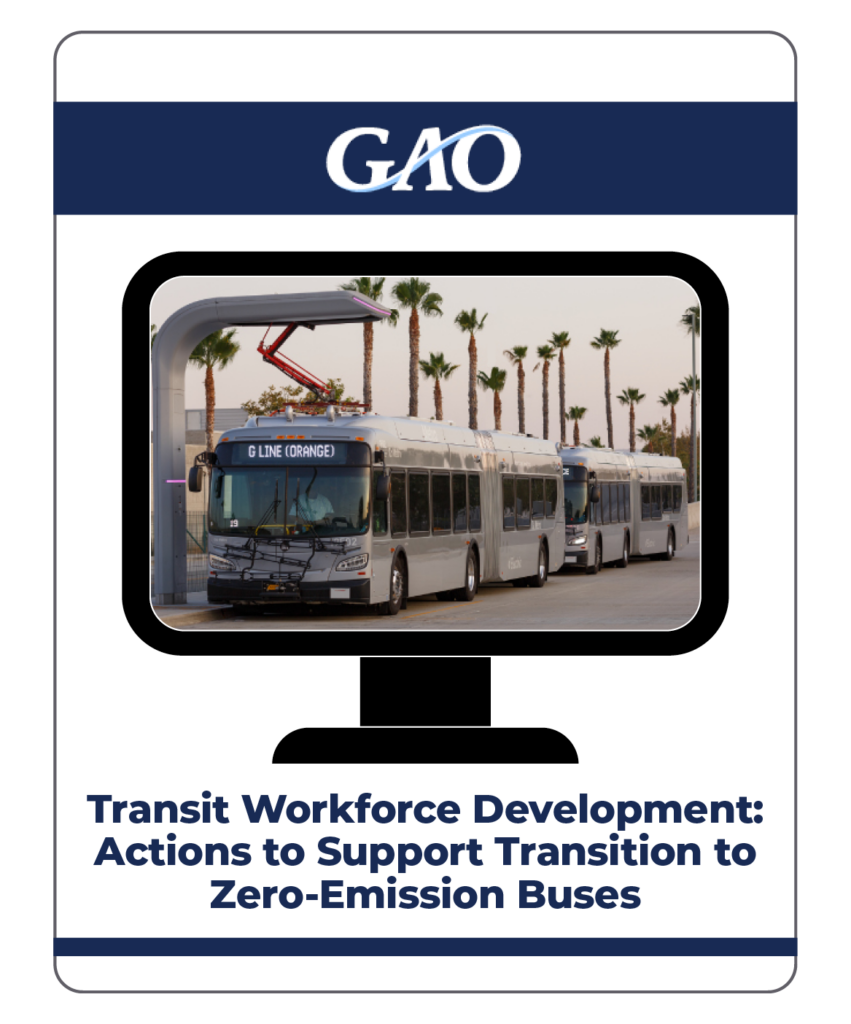
GAO Low-No Transition Report

After data analysis and expert interviews, GAO published this report which describes: (1) the status of transit agencies’ transition to low-no bus fleets; (2) skill- and workforce-development needs of transit agencies; and (3) recommended FTA actions to assist transit agencies in preparing their workforces for low-no buses.

U.S. Government Accountability Office

December 2024

LEARN MORE

After data analysis and expert interviews, GAO published this report which describes: (1) the status of transit agencies’ transition to low-no bus fleets and any challenges they may face meeting transition goals; (2) skill- and workforce-development needs of transit agencies and actions selected agencies are taking to address any workforce gaps; and (3) recommended FTA actions to assist transit agencies in preparing their workforces new fuel technologies.

LEARN MORE
RESOURCE TYPE: ,

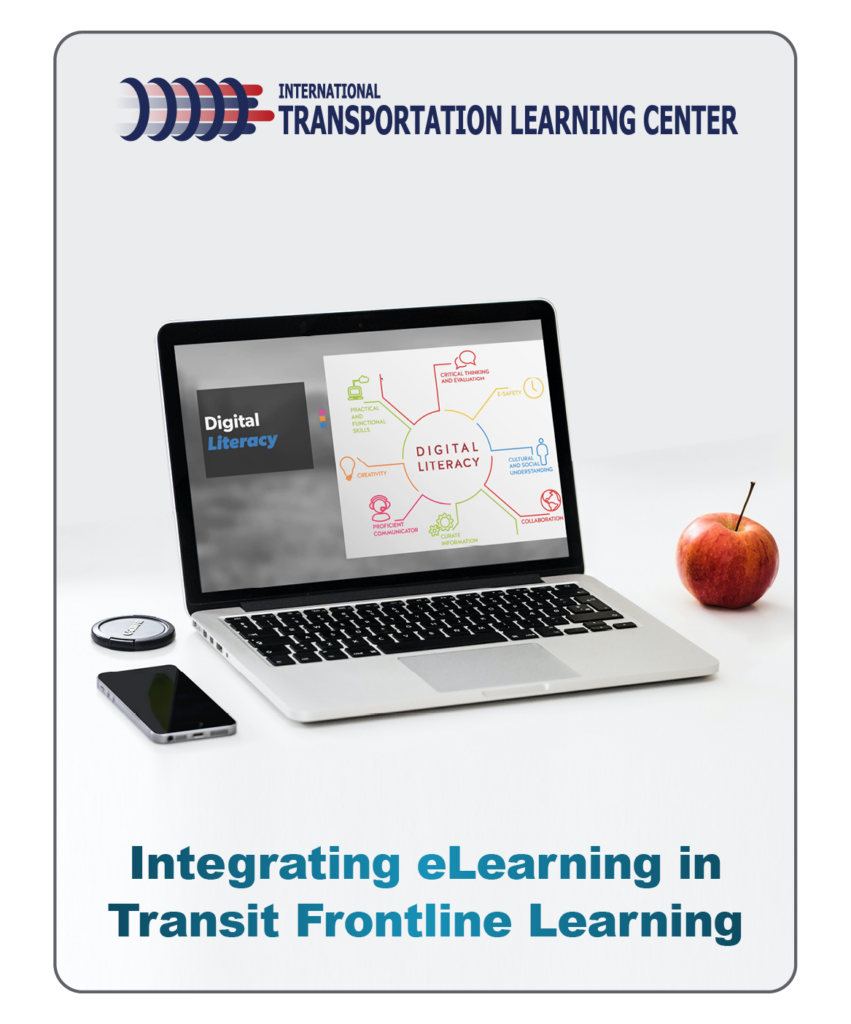
Integrating eLearning in Transit Frontline Learning

In this webinar, guest speaker Ron Thiele, Xpan Interactive, presented on ways in which some transit organizations use eLearning.

This is one of several skill booster events held by the International Transportation Learning Center (ITLC).

International Transportation Learning Center

May 2020

LEARN MORE

Please see video below.

LEARN MORE

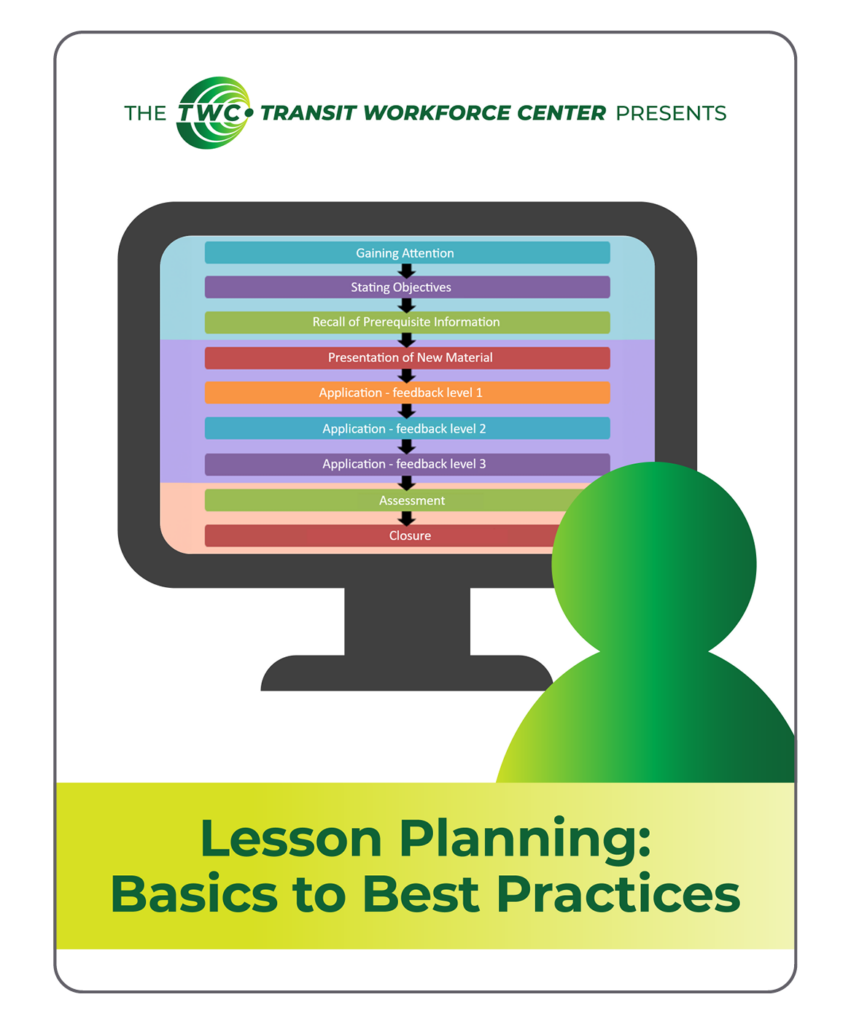
Lesson Planning Webinar: Basics to Best Practices

Have you ever been tasked with developing or delivering a class and didn’t know where to start? Do you have a class that isn’t engaging learners and you don’t know why? On September 26, 2023, TWC hosted an informative webinar on Lesson Planning basics and best practices with award winning author and advisor on all things training, Dr. Chuck Hodell. We took a high-level look at Lesson Planning for those new to training, as well as discussed how to overcome inherent challenges and best practices for transit trainers.

Transit Workforce Center

September 2023

LEARN MORE