
Resource Center

The Transit Workforce Center is pleased to host a curated collection of publications and other materials to assist stakeholders engaged in transit workforce development. The Resource Center includes case studies, training materials, research reports, and other materials of interest, including publications produced by federal government agencies, transit organizations, and independent research entities. Resources may be filtered by topic, resource type, and transit mode. This TWC blog post explains how to use the Resource Center.

We are continuing to update the Resource Center regularly. Please contact us via the Request Help menu option if you would like assistance using the Resource Center or are looking for resources on a particular topic. We also welcome suggestions of topics or specific resources to add.

Content in external resources linked from the Resource Center is solely the responsibility of the resource authors and does not necessarily reflect the perspectives of or endorsement by the Transit Workforce Center.

Found 90 results for "mentor"
RESOURCE TYPE: , | TRANSIT MODE:

National Apprenticeship Resource Hub

Apprenticeship Programs can help employers develop their future workforce and meet their business needs. The National Apprenticeship Resource Hub includes National Occupational Frameworks which can help develop a new apprenticeship program or refine an existing program. Each framework outlines the basic information sponsors need to register an apprenticeship program in their occupation.

The Urban Institute

December 2024

LEARN MORE

The National Apprenticeship Resource Hub includes Occupational Frameworks which can help develop a new apprenticeship program or refine an existing program. Each framework outlines the basic information sponsors need to register an apprenticeship program in their occupation including an occupational overview that describes the occupation, alternative job titles, and any prerequisites; a work process schedule that outlines what organizations can expect apprentices to learn on the job and the required hours; and a related technical instruction outline that presents considerations for courses and training apprentices can pursue during the apprenticeship. The National Occupational Frameworks also include detailed instructions on how to use them when creating your registration application.

LEARN MORE

National Transit Frontline Worker Recruitment Campaign

Across the United States, whether large, small, urban, rural, or tribal, transit agencies are facing the challenge of recruiting and retaining drivers, mechanics, and technicians who can operate and maintain the buses of our public transit systems.  To help support local transit efforts, TWC is developing the #ConnectingMyCommunity national frontline worker recruitment campaign, coordinated with the Federal Transit Administration (FTA) and industry, labor, and community partners from around the country.

Transit Workforce Center

July 2022

LEARN MORE
RESOURCE TYPE: , | TRANSIT MODE:

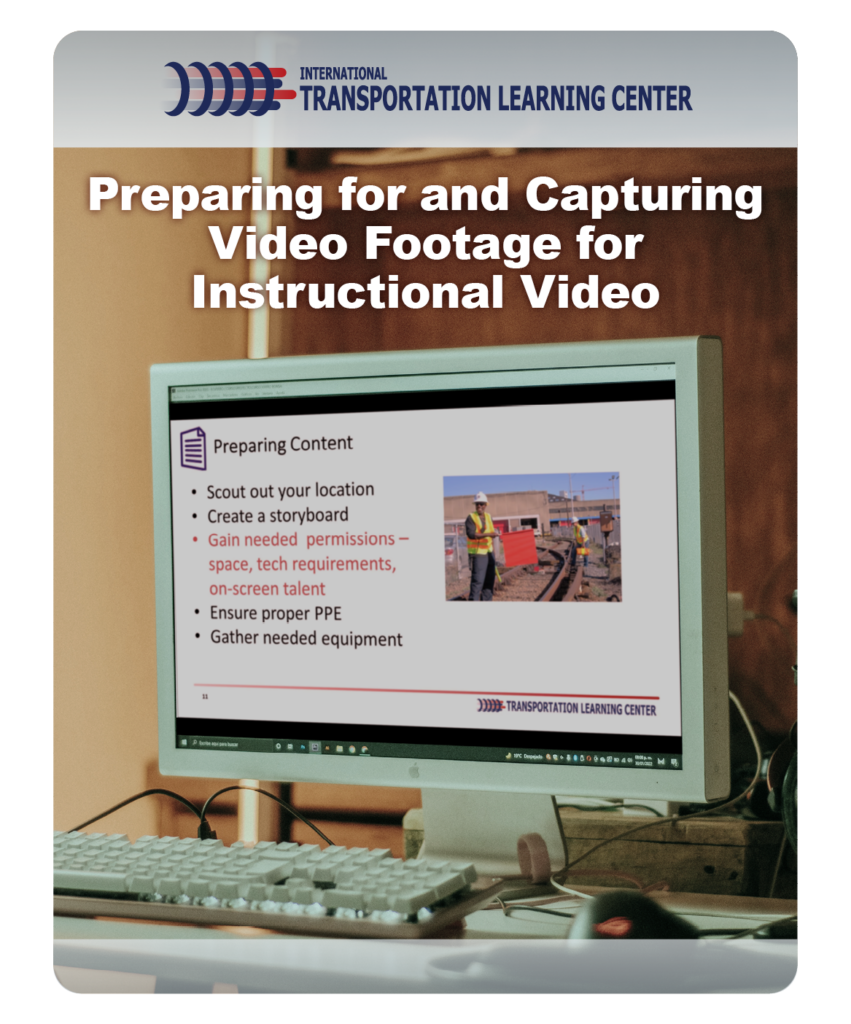
Preparing for and Capturing Video Footage for Instructional Video

This video uses real-world examples to demonstrate the Dos and Don’ts of capturing video and audio for instructional videos. It also outlines how best to prepare for this process.

International Transportation Learning Center

March 2021

LEARN MORE

Digital and video instruction are two ways in which transit agencies can enhance their current training methods for their frontline employees. In a previous skill booster event, we showcased video editing software Filmora™. But before you can edit video, you need to capture it. As videography expert and the presenter of this session Kenyon Corbett says, “there is no replacement for good audio and video.”

This video uses real-world examples to demonstrate the Dos and Don’ts of capturing video and audio for instructional videos. It also outlines how best to prepare for this process.

This is one of several skill booster events held by the International Transportation Learning Center (ITLC). Other webinars can be found by filtering by resource type.

LEARN MORE
RESOURCE TYPE: , | TRANSIT MODE:

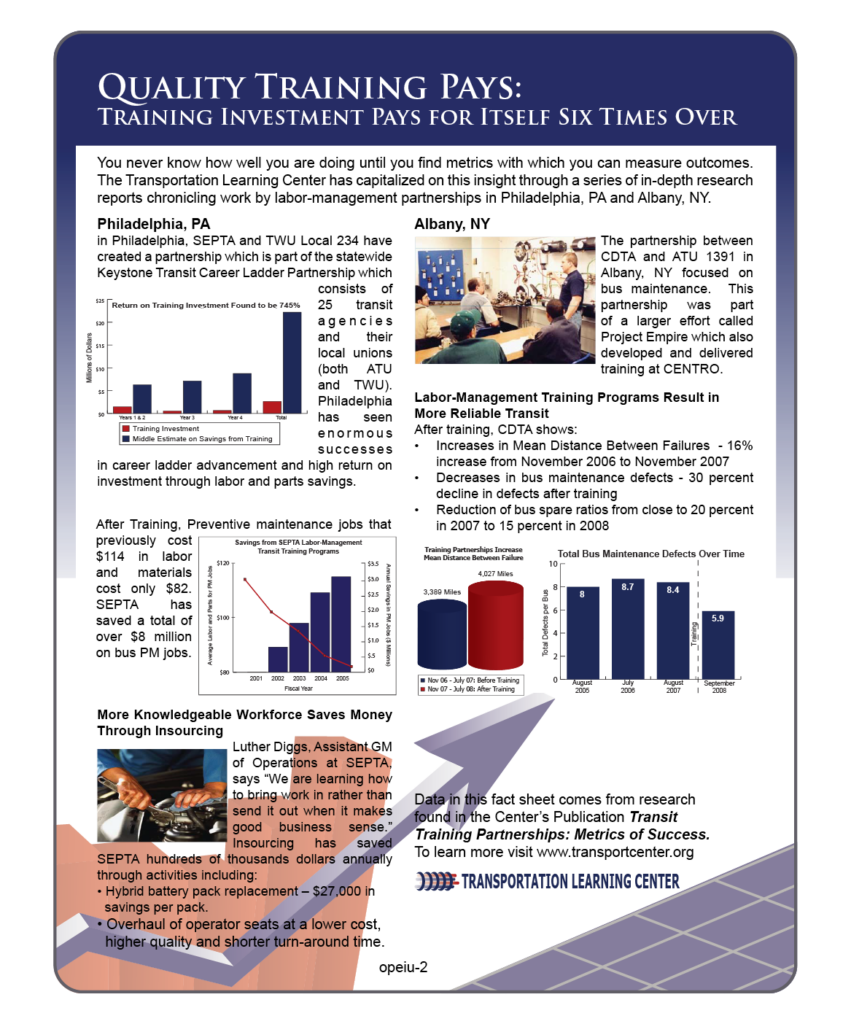
Quality Training Pays: Training Investment Pays for Itself Six Times Over

You never know how well you are doing until you find metrics with which you can measure outcomes. The Transportation Learning Center has capitalized on this insight through a series of in-depth research reports chronicling work by labor-management partnerships in Philadelphia, PA and Albany, NY. This fact sheet outlines these findings and shows a substantial return on training investment.

International Transportation Learning Center

June 2011

LEARN MORE

Rail Signals Training Content and Standards

An overview of ITLC’s signals training course  (2 modules—level 100 and 200)​.

International Transportation Learning Center

LEARN MORE
RESOURCE TYPE: | TRANSIT MODE:

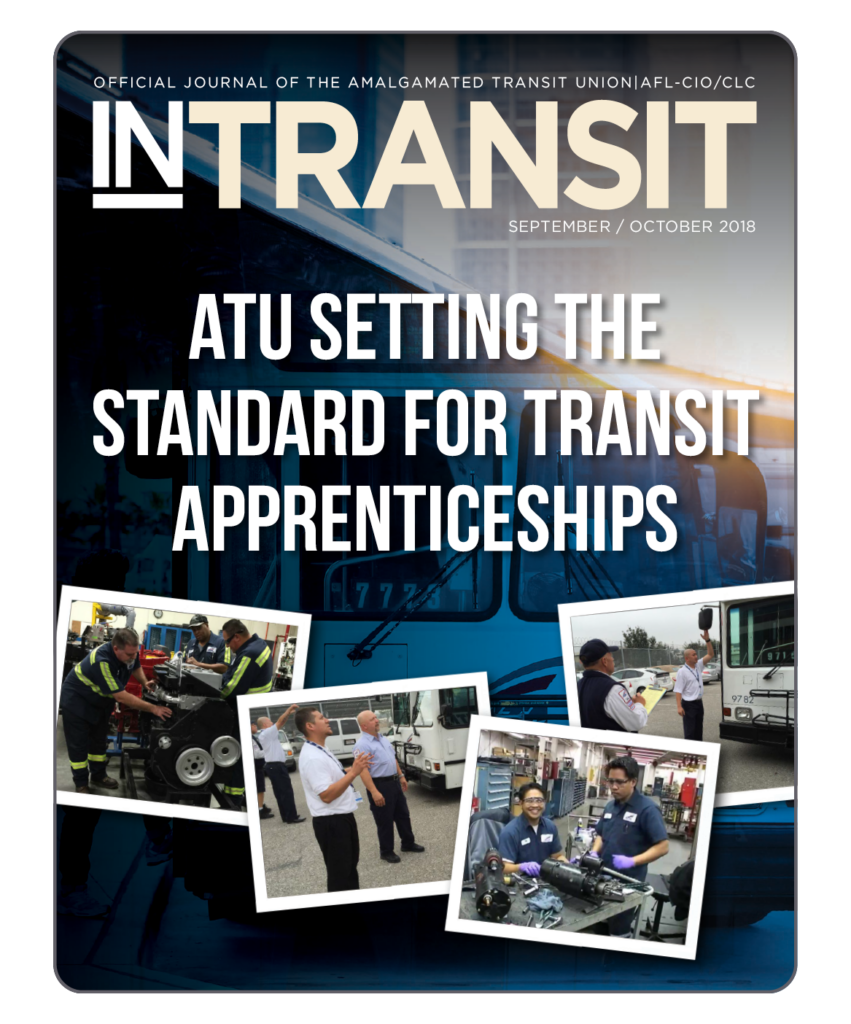
Setting the Standard for Transit Apprenticeships

This article in In Transit summarizes The Amalgamated Transit Union’s (ATU’s) and the International Transportation Learning Center’s (ITLC’s) efforts to promote apprenticeship program development. It discusses apprenticeship programs at several transit agencies and ATU locals, as well as the role of mentorship in a successful apprenticeship program.

Amalgamated Transit Union

September 2018

LEARN MORE
RESOURCE TYPE: , | TRANSIT MODE:

Signals Training Standards Curriculum Map

​A curriculum map of the Signals Training Standards released on January 22, 2008.

International Transportation Learning Center

January 2008

LEARN MORE

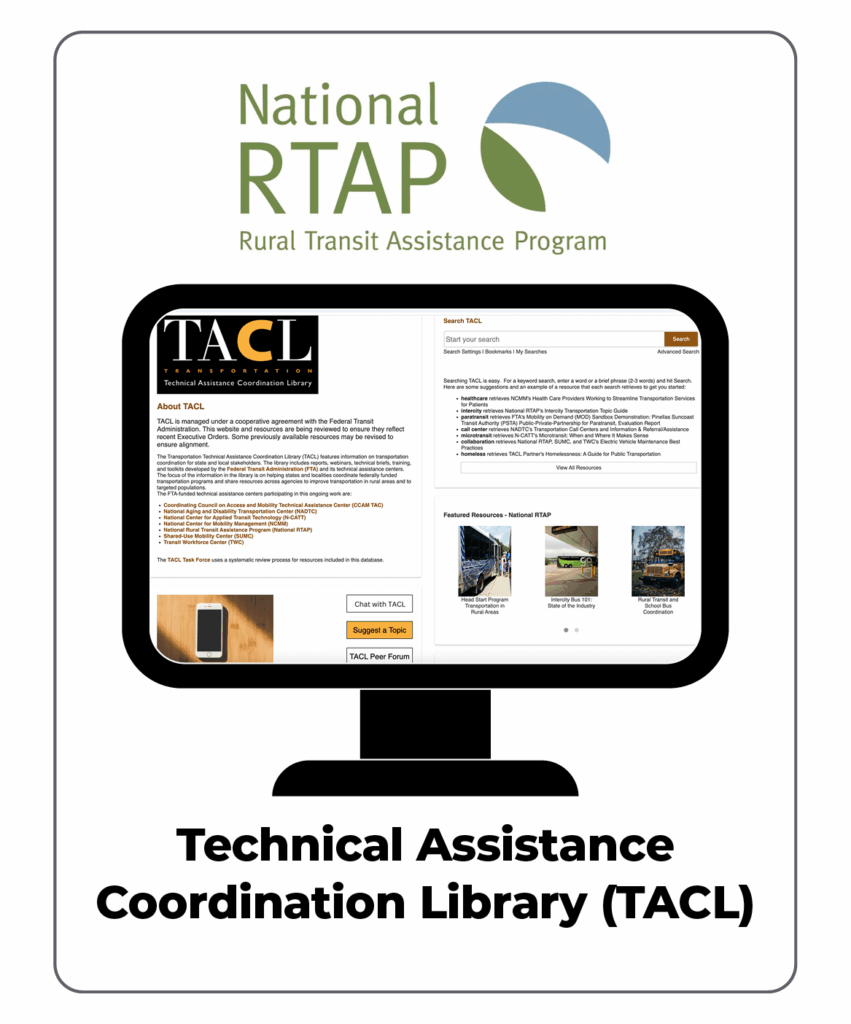
Technical Assistance Coordination Library (TACL)

The Transportation Technical Assistance Coordination Library (TACL) provides a viable methodology and platform for access and findability of rural and tribal transit coordination resources across a broad range of transportation technical assistance centers and the Federal Transit Administration (FTA).

National Rural Transit Assistance Program

LEARN MORE

Transportation Technical Assistance Coordination Library (TACL)

The Transportation Technical Assistance Coordination Library (TACL) provides a viable methodology and platform for access and findability of rural and tribal transit coordination resources across a broad range of transportation technical assistance centers and the Federal Transit Administration (FTA).

The FTA-funded Technical Assistance (TA) Centers participating in this ongoing work are:

  • National Aging and Disability Transportation Center (NADTC)
  • National Center for Applied Transit Technology (N-CATT)
  • National Center for Mobility Management (NCMM)
  • National Rural Transit Assistance Program (National RTAP)
  • Shared Use Mobility Center (SUMC)
  • Transit Workforce Center (TWC)

The TACL Task Force uses a systematic review process for resources included in the database. New resources will be added on a quarterly basis. Let us know if you would like to serve as a peer reviewer for our resources.

Why was TACL created?

The United States Government Accountability Office (GAO) published Public Transportation: Enhanced Federal Information Sharing on Coordination Could Improve Rural Transit Services in January 2020. GAO recommended that FTA “develop a communication plan that will effectively share information with state and local stakeholders on coordination opportunities in an accessible and informative way.” This effort was created to improve interagency resource coordination between FTA and its five TA Centers.

How can TACL be used?

TACL resources can be used to identify high quality technical assistance on transportation coordination. The resources can be used for research, training, practice, operations, planning, and other purposes. We encourage authors to cite TACL resources.

Ready to get started?

Visit http://transportation-tacl.org. Click on the Training tab at the top for instructions.

If you have a question about TACL, or if you would like to be considered to become a TACL peer reviewer, please contact info@nationalrtap.org

LEARN MORE