Resource Center

The Transit Workforce Center is pleased to host a curated collection of publications and other materials to assist stakeholders engaged in transit workforce development. The Resource Center includes case studies, training materials, research reports, and other materials of interest, including publications produced by federal government agencies, transit organizations, and independent research entities. Resources may be filtered by topic, resource type, and transit mode. This TWC blog post explains how to use the Resource Center.

We are continuing to update the Resource Center regularly. Please contact us via the Request Help menu option if you would like assistance using the Resource Center or are looking for resources on a particular topic. We also welcome suggestions of topics or specific resources to add.

Content in external resources linked from the Resource Center is solely the responsibility of the resource authors and does not necessarily reflect the perspectives of or endorsement by the Transit Workforce Center.
RESOURCE TYPE: | TRANSIT MODE:

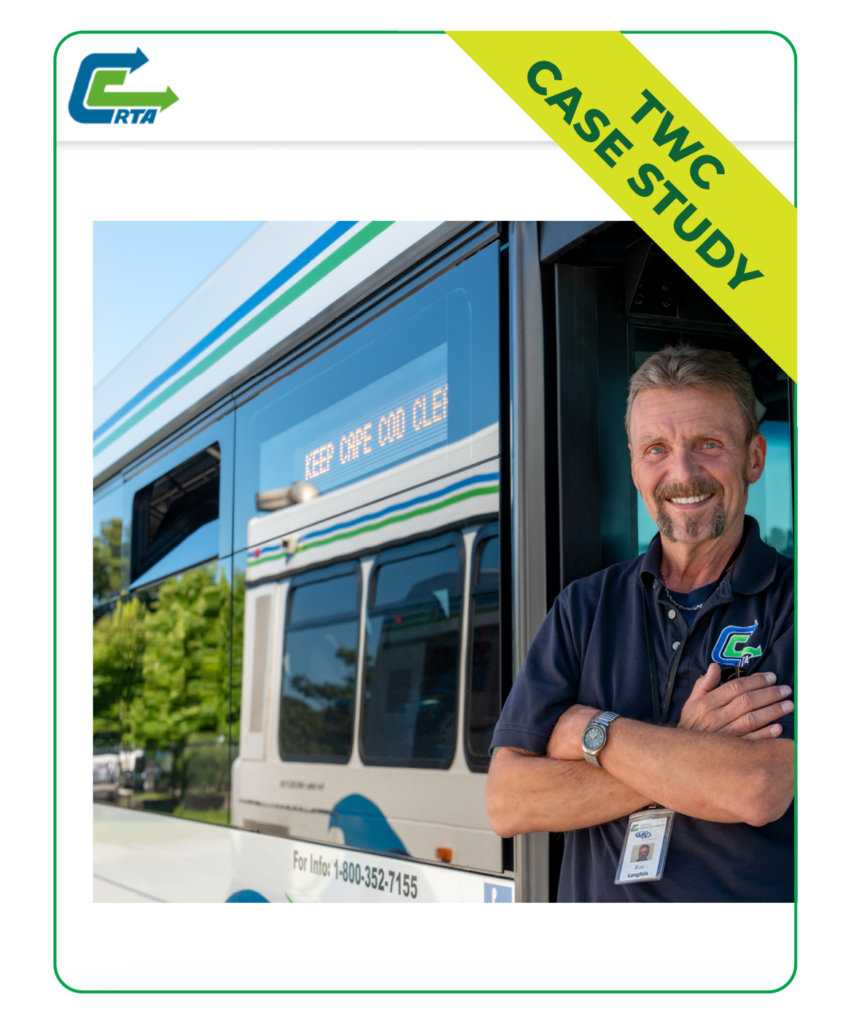
Recruiting Older Workers and Retirees at Cape Cod Regional Transit Authority

This TWC mini case study focuses on Cape Cod Regional Transit Authority’s recruitment of older workers and retirees.

Cape Cod Regional Transit Authority; Transit Workforce Center

September 2022

LEARN MORE

Cape Cod Regional Transit Authority (CCRTA) in Massachusetts serves 15 towns within a 400 square miles area in an area where the population triples in the summer with seasonal residents. CCRTA runs seven year-round fixed route lines, several on-demand and hybrid on-demand services, and three summer shuttle services. In 2021, CCRTA served approximately 2.5 million people with 98 drivers.

Faced with driver shortages, CCRTA and Amalgamated Transit Union Local 1548 worked together and negotiated driver raises and $1,000 bonuses paid after 90-days. In addition, a six-step salary scale to reach the top pay grade was reduced to two steps. Drivers can now reach the top pay level within two years.

Barnstable County’s older adult population is among the largest per capita in the country, and CCRTA has instituted hiring initiatives aimed toward the older worker and retiree population. In connecting with this population, CCRTA has taken a variety of actions, including:

  • Reaching out through Cape Cod Elder Services to communicate CCRTA’s interest in hiring older workers. CCRTA’s Human Services Transportation Manager sits on this organization’s board, facilitating ongoing contact.
  • Targeting recruitment of retiring teachers, firefighters, police, and school bus drivers. Cape Cod RTA staff visited schools, fire houses, police stations, and municipal offices to share recruitment information.
  • Visited each town on Cape Cod, talked with local retirement agency officials, and posted and mailed banners and notices.
  • Overall increase in the agency’s traditional and social media presence generally, including advertising explicitly aimed at older adults, including on social media. Developed advertising, messaging, and imagery to make older workers and retirees feel welcome. To see samples of advertising, visit Cape Cod RTA Jobs on Facebook, the ad on their website’s front page,  and see the video, featuring older drivers, on the CCRTA career page.
  • Emphasizing the short time it takes to reach the highest salary level, a compelling message for older people and retirees, who often value salaries more than benefits, as well as the ability to reach the highest level within their time at the agency.
  • Offering various employment options, including full-time and part-time, and seasonal. The agency has found that individual needs lead to varied choices; they estimate their older employees have split 50-50 in what scheduling option they choose.
  • Providing full CDL training, testing and additional agency-specific training for all employees without CDLs. The agency pays for all training.
  • Offering options for non-CDL drivers, who operate smaller vans. The agency encourages the CDL route because it gives drivers more flexibility in shifts and allows them to work and get paid at a higher rate.
  • Currently exploring working with the Barnstable County Retirement Commission to arrange for a notice about CCRTA employment options to be part of the Commission’s information packet when an employee puts in for retirement.

CCRTA values its older workforce and their commitment to the job; through its efforts, it has been able to hire a dozen older adults / retirees as drivers. The agency notes that with this population, it is reasonable to expect excellent attendance, while also allowing for the potential of more short-term disability and time for medical appointments. COVID-19 saw CCRTA lose about half of its older adult workforce, given that population’s sensitivity to exposure. However, CCRTA is renewing its recruitment efforts in this area through the various methods noted.

For more information, contact:

Penny Grossman, H.R. Manager – Pgrossman@capecodrta.org – 508-385-1430, ext. 106

LEARN MORE
RESOURCE TYPE: , | TRANSIT MODE:

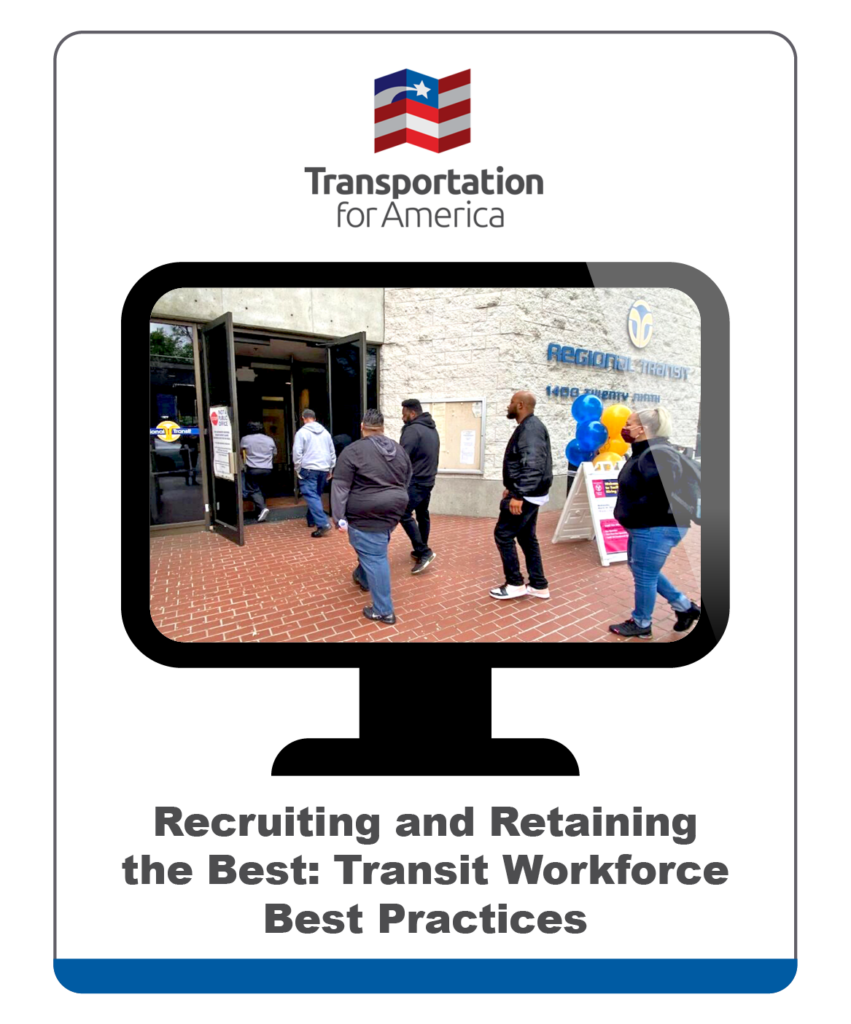
Recruiting and Retaining the Best: Transit Workforce Best Practices

This blog post from Transportation for America details successful strategies and best practices employed by transit agencies to empower their operator and maintenance workforces.

Transportation for America

September 2022

LEARN MORE
RESOURCE TYPE: , | TRANSIT MODE:

Transportation Learning Network (TLN)

The Transportation Learning Network (TLN) is part of an industry-wide effort aimed at strengthening transit training programs. It is designed and maintained by the International Transportation Learning Center, and provides a platform for accessing industry specific training materials – both for direct self-led online learning and also for download by trainers to use in a classroom or field settings. Topics covered include maintenance of transit elevators and escalators, signals, railcar and traction power.

International Transportation Learning Center

September 2022

LEARN MORE
RESOURCE TYPE: | TRANSIT MODE:

Wire Women: Lighting it Up

This illustrated publication tells the stories of women who are undertaking apprenticeship to become union electricians. This resource could be used by transit agencies, unions, or apprenticeship programs as promotional material or for educational purposes.

Sharon Szymanski

September 2022

LEARN MORE
RESOURCE TYPE: , | TRANSIT MODE: ,

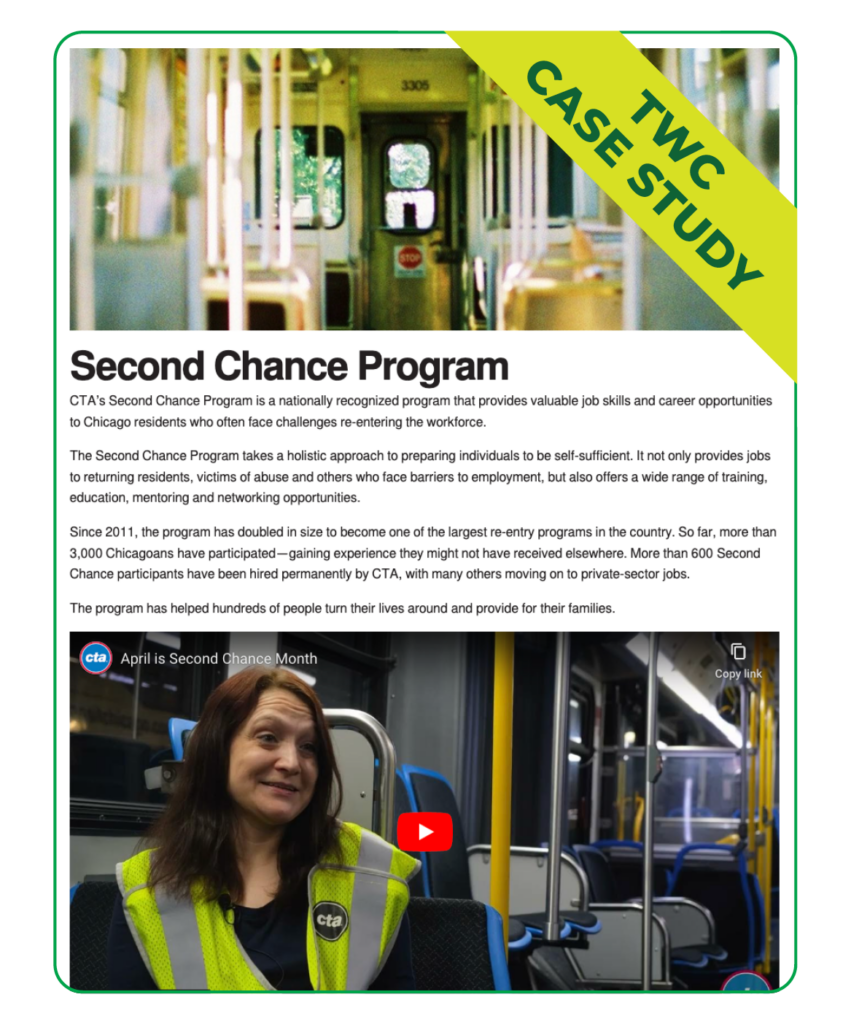
Second Chance Transit Programs

Several transit agencies across the country have established Second Chance programs to support formerly-incarcerated individuals as they reenter the workforce; these programs set pathways into frontline transit positions, often focusing on driver recruitment. These initiatives involve active collaboration between transit agencies and departments of corrections.  Agencies have also worked with other partners, including their local unions, state and local workforce development agencies, ex-offender support programs, and local community organizations.  

August 2022

LEARN MORE

Basic descriptions of some current state and local programs can be found at the links below.

LEARN MORE
RESOURCE TYPE: , | TRANSIT MODE:

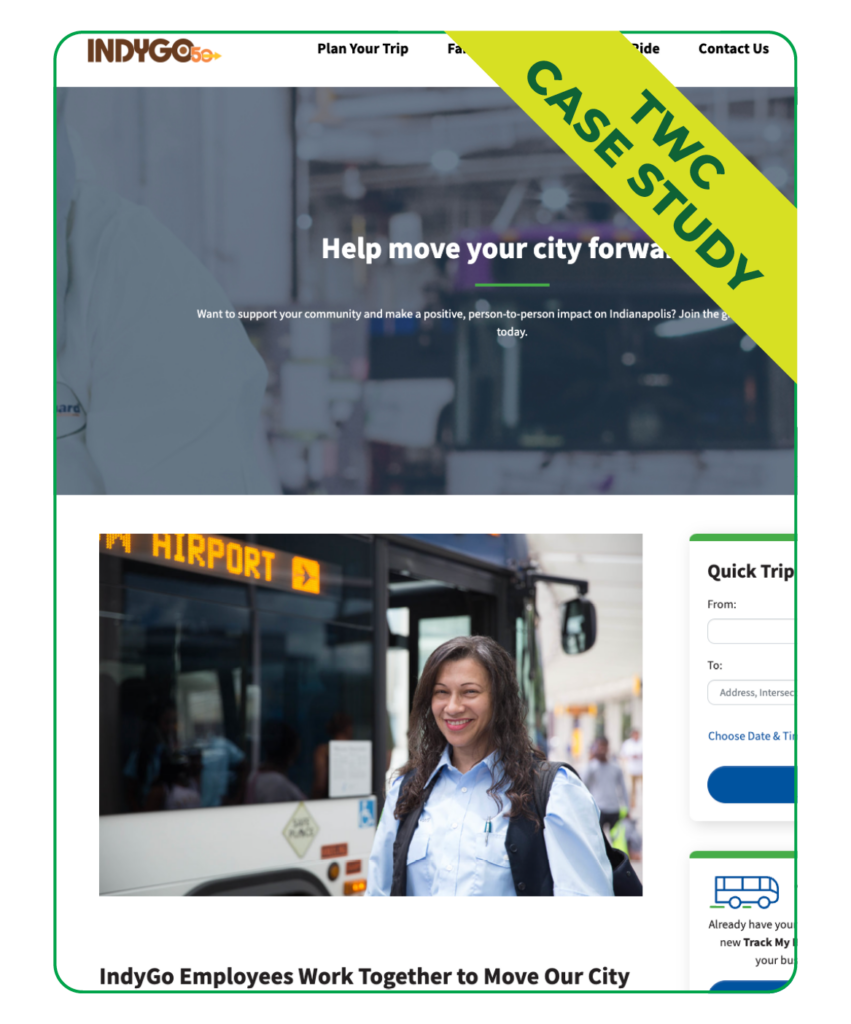
IndyGo’s Employment Opportunities Page

The IndyGo transit agency, based in Indianapolis, Indiana, offers high-quality career information on its website. This resource summarizes effective elements of the career page.

IndyGo

August 2022

LEARN MORE

IndyGo’s career page helps site visitors to understand what it’s like to work at the agency and how to apply.  The page also highlights key job benefits and emphasizes the opportunity to serve the community. Overall, the employment section of IndyGo’s website demonstrates a number of key communication elements that support effective outreach to potential applicants.  These elements include:

  • An easily accessible and identifiable section on the website.  “Employment” has its own clickable category, not a subcategory that may be harder to locate.
  • Clear statements about IndyGo’s mission, emphasizing community service, connection, and working together to make a difference in people’s lives.  These messages attract a range of potential target audiences, and they make clear the difference between a public service career, as opposed to other careers applicants may be considering.
  • A detailed list of benefits, with additional specific benefits for drivers noted.  Among those benefits, the list includes unique aspects of the driver position that distinguishes it from other potentially competing careers (e.g., long-haul trucking), noting benefits such as “all local work.”
  • Highlighted aspects of the driver position that emphasize the connection with and support provided to riders.
  • A thoughtful list of questions for potential applicants to consider about themselves and the type of work they might want before they decide to move ahead with the application.
  • Detailed information on how and where to apply, basics of how to prepare for and what to bring to an interview, and important specifics about the steps of the hiring process and initial orientation and training programs.
  • IndyGo’s Why I Drive segment on their website includes a video featured in the National Frontline Workforce Recruitment Campaign Toolkit video library elsewhere on this website.  That link on IndyGo’s website also features brief worker profiles, another summary of benefits, and a note on IndyGo’s Second Chance Initiative.
  • IndyGo’s website includes a prominent option to translate the site into Spanish.

LEARN MORE
RESOURCE TYPE: | TRANSIT MODE:

Veterans in Registered Apprenticeship

This fact sheet provides an overview of how veteran-specific public benefits can be applied to support a veteran’s completion of a registered apprenticeship program. It also provides links to resources for more detailed information on apprenticeship resources for service members, employment resources for veterans, and more.

ApprenticeshipUSA

August 2022

LEARN MORE
RESOURCE TYPE: , | TRANSIT MODE:

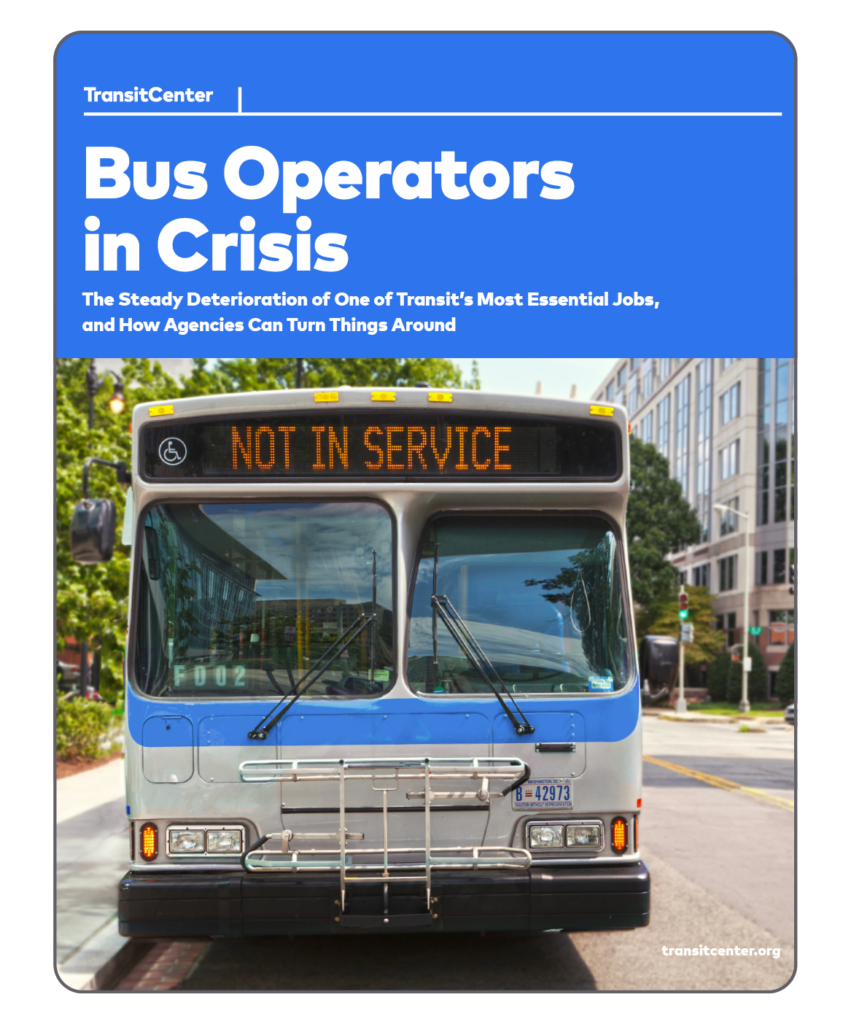
Bus Operators in Crisis

TransitCenter’s report, entitled Bus Operators in Crisis: The Steady Deterioration of One of Transit’s Most Essential Jobs, and How Agencies Can Turn Things Around, analyzes the nationwide phenomenon of bus operator shortages and advocates for enhanced job quality in the occupation.

TransitCenter

July 2022

LEARN MORE

This resource also includes a link to a webinar hosted in July, 2022 presenting information from the report and slides from the webinar.

LEARN MORE