
Resource Center

The Transit Workforce Center is pleased to host a curated collection of publications and other materials to assist stakeholders engaged in transit workforce development. The Resource Center includes case studies, training materials, research reports, and other materials of interest, including publications produced by federal government agencies, transit organizations, and independent research entities. Resources may be filtered by topic, resource type, and transit mode. This TWC blog post explains how to use the Resource Center.

We are continuing to update the Resource Center regularly. Please contact us via the Request Help menu option if you would like assistance using the Resource Center or are looking for resources on a particular topic. We also welcome suggestions of topics or specific resources to add.

Content in external resources linked from the Resource Center is solely the responsibility of the resource authors and does not necessarily reflect the perspectives of or endorsement by the Transit Workforce Center.

Found 19 results for "Transit assault mitigation and operator protection"

Assault Awareness and Prevention for Transit Operators (Train the Trainer)

This virtual course will provide transit agency instructional staff with the support necessary to deliver the Assault Awareness and Prevention course within their agencies. Each registered participant will receive an electronic instructor package that will include an instructor guide, course slides, instructor notes, and the participant workbook. Participants will be able to deliver the training to provide transit bus operators with knowledge and skills to reduce the likelihood of assault incidents.

National Transit Institute

January 2023

LEARN MORE

You can register for the course with the Rutgers University Noncredit Course Catalog & Registration System. The direct delivery course for operators can be found here.

LEARN MORE

Assault Awareness and Prevention for Transit Operators (Direct Delivery)

This course provides transit bus operators with knowledge and skills to reduce the likelihood of assault incidents, including defining assault and types of incidents that could be considered assault, covering prevention strategies such as communication and response skills, and emphasizing the importance of reporting assault incidents and seeking recovery assistance.

National Transit Institute

LEARN MORE
RESOURCE TYPE: | TRANSIT MODE:

Practices to Protect Bus Operators from Passenger Assault: A Synthesis of Transit Practice

The TCRP Synthesis 93 highlights practices and policies implemented by transit agencies to deter and mitigate assaults on bus operators.

Transit Cooperative Research Program

January 2011

LEARN MORE
RESOURCE TYPE: , | TRANSIT MODE:

Preventing and Mitigating Transit Worker Assaults in the Bus and Rail Transit Industry

This report provides recommendations from state and local transportation agencies, labor unions, research organizations, and national transportation associations to address the elements of a safety management system (SMS) approach to preventing and mitigating transit worker assaults, including policy, risk management, safety promotion, and safety assurance.

Transit Advisory Committee for Safety

July 2015

LEARN MORE
RESOURCE TYPE: | TRANSIT MODE:

ATU Launches Agency Safety Plan Review Training for Local Safety Committees

ATU Locals from across the U.S. have been taking part in an innovative ATU Public Transportation Agency Safety Plan Accountability (PTASP) training. The training and materials give locals resources to ensure transit agencies work to implement safety committees and other measures under the bipartisan Infrastructure law.

ATU International

December 2023

LEARN MORE
RESOURCE TYPE: , , | TRANSIT MODE:

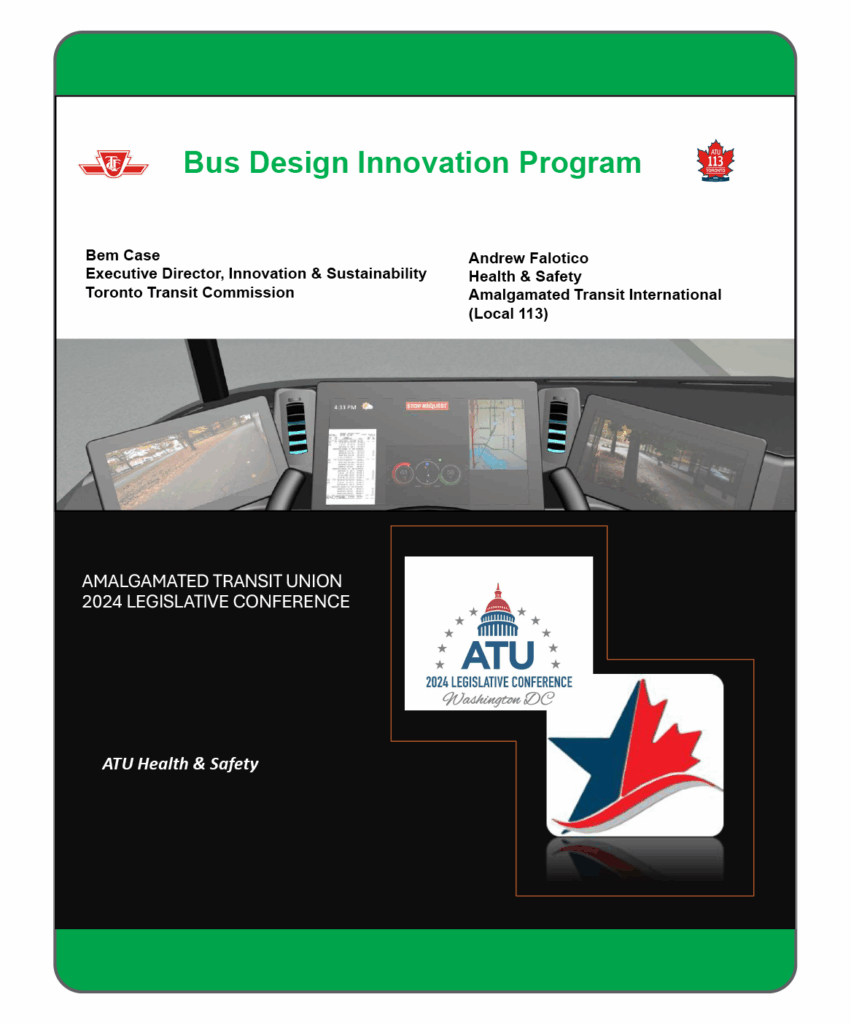
Bus Design Innovation Program

The Bus Design Innovation Project aimed to improve the security and environment of bus operators. The design provides a barrier that shields the operator’s workspace from the passenger area, which reduces the risk of assaults and protects against biohazards without decreasing view of mirrors. The design also improved ergonomics. The partnership between ATU International, ATU local 113, Centennial College, and Toronto Transit Commission enabled the development of a prototype, which was showcased at the ATU Canada Conference in September 2024. 

ATU International; ATU local 113; Centennial College; Toronto Transit Commission

LEARN MORE
RESOURCE TYPE: | TRANSIT MODE: ,

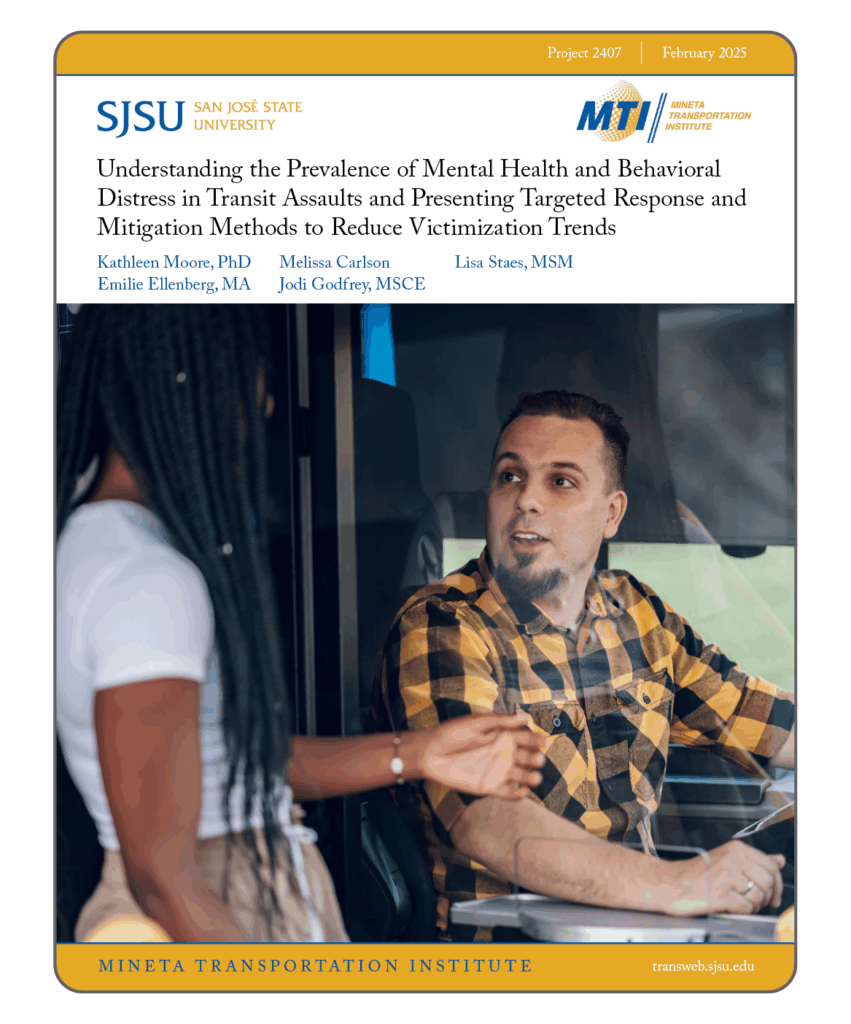
Understanding the Prevalence of Mental Health and Behavioral Distress in Transit Assaults

This research aims to better understand the prevalence of mental health and behavioral distress in transit assaults and present corresponding targeted response and mitigation methods to reduce victimization trends. It includes a literature review, a data presentation and overview of reported public transit assault-related events, an examination of the contributing factors to those events, and documentation of 10 transit agency case studies. It discusses various approaches and strategies that transit agencies have used to prepare transit vehicle operators and other frontline workers to better recognize mental health presentations and engage appropriately. The research team gathered additional data from case study sites, including the methods used to address assault-related challenges and the successful community engagement and partnerships. The report provides findings and policy and practice recommendations.

Mineta Transportation Institute

February 2025

LEARN MORE

Understanding the Prevalence of Mental Health and Behavioral Distress in Transit Assaults and Presenting Targeted Response and Mitigation Methods to Reduce Victimization Trends

This research aims to better understand the prevalence of mental health and behavioral distress in transit assaults and present corresponding targeted response and mitigation methods to reduce victimization trends. It includes a literature review, a data presentation and overview of reported public transit assault-related events, an examination of the contributing factors to those events, and documentation of 10 transit agency case studies. It discusses various approaches and strategies that transit agencies have used to prepare transit vehicle operators and other frontline workers to better recognize mental health presentations and engage appropriately. It also highlights evidence-based practices that transit agencies can use to better prepare their systems and provide tools employees can use to better communicate with individuals who may be having mental health-related episodes. The research team gathered additional data from case study sites, including the methods used to address assault-related challenges and the successful community engagement and partnerships. The report provides findings and policy and practice recommendations.

LEARN MORE

FTA Safety Training Resources

This landing page features FTA safety training resources, including the 2024–2025 Virtual Safety Risk Management and Safety Assurance Workshop and De-Escalation Training Resource Directory, as well as FTA sponsored resources, such as the USDOT Transportation Safety Institute (TSI).

Federal Transit Administration

September 2024

LEARN MORE