Resource Center

The Transit Workforce Center is pleased to host a curated collection of publications and other materials to assist stakeholders engaged in transit workforce development. The Resource Center includes case studies, training materials, research reports, and other materials of interest, including publications produced by federal government agencies, transit organizations, and independent research entities. Resources may be filtered by topic, resource type, and transit mode. This TWC blog post explains how to use the Resource Center.

We are continuing to update the Resource Center regularly. Please contact us via the Request Help menu option if you would like assistance using the Resource Center or are looking for resources on a particular topic. We also welcome suggestions of topics or specific resources to add.

Content in external resources linked from the Resource Center is solely the responsibility of the resource authors and does not necessarily reflect the perspectives of or endorsement by the Transit Workforce Center.

Found 13 results for "Curated apprenticeship resources"
RESOURCE TYPE: | TRANSIT MODE:

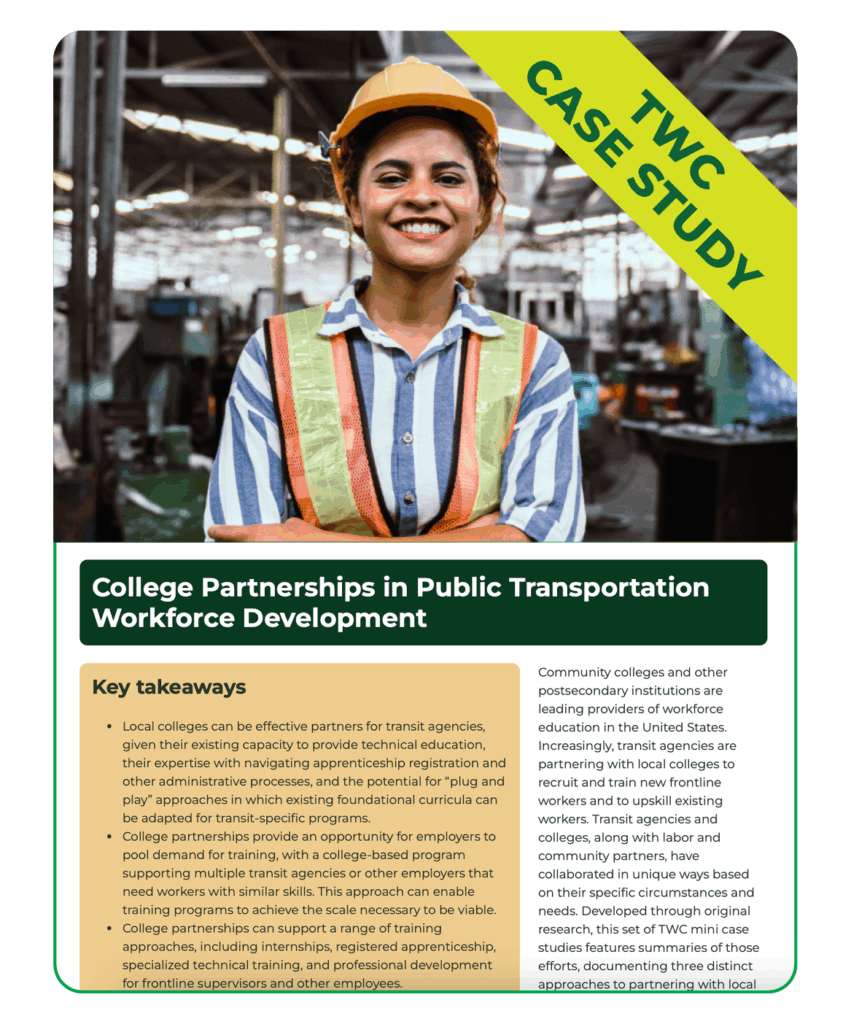
College Partnerships in Public Transportation Workforce Development

Community colleges and other postsecondary institutions are leading providers of workforce education in the United States. Increasingly, transit agencies are partnering with local colleges to recruit and train new frontline workers and to upskill existing workers. Transit agencies and colleges, along with labor and community partners, have collaborated in unique ways based on their specific circumstances and needs. Developed through original research, this set of TWC mini case studies features summaries of those efforts, documenting three distinct approaches to partnering with local colleges.

Transit Workforce Center

September 2025

LEARN MORE
RESOURCE TYPE: | TRANSIT MODE:

Making Connections 2022 – Growing Your Own Through Apprenticeship: A Joint Approach to Building Skills

This session about apprenticeship was presented as part of TWC’s Making Connections 2022 transit workforce conference in December, 2022.

Transit Workforce Center

December 2022

LEARN MORE

Session Summary: Apprenticeship programs create a foundation for strong, effective workforce development programs. The ability to build and maintain these programs requires strong labor-management partnerships, or, in the case of nonunion agencies, ongoing involvement of, and management engagement with, the frontline workforce. In this session, panelists from transit agencies presented examples of challenges met and lessons learned as they designed and implemented their apprenticeship programs. Attendees heard how apprenticeship can support a variety of frontline transit occupations and the benefits that apprenticeship offers.

Moderator
  • Jamaine “G” Gibson: Director of Apprenticeships and Workforce Development – Amalgamated Transit Union
Speakers
  • Dexter Bishop: Elevator/Escalator Journeyman – Amalgamated Transit Union/Local 689
  • Stephanie Deiger: Chief Human Resources Officer – Southeastern Pennsylvania Transportation Authority
  • Brian Funk: Chief Operating Officer and Deputy General Manager – MetroTransit Minneapolis
  • Michael Hanssen: Supervisor of Technical Skills Training – Washington Metropolitan Area Transit Authority
  • Alec Johnson: Bus Operator Apprenticeship Coordinator – MetroTransit Minneapolis/Amalgamated Transit Union Local 1005

LEARN MORE
RESOURCE TYPE: | TRANSIT MODE:

Making Connections 2024 – Apprenticeship 101 – How Transit Apprenticeship Operates

This session about transit apprenticeships was presented as part of TWC’s Making Connections 2024 transit workforce conference in November, 2024.

Transit Workforce Center

November 2024

LEARN MORE

Session Description: Apprenticeship programs are rapidly expanding at transit locations across the country. With quality training tied to clearly-identified career ladders and advancement, these programs are commonly regarded as the “gold standard” of workforce development. Documented benefits include increased retention, reductions in absenteeism, and the creation of a sustainable talent pipeline. These programs also result in better employee morale and a more engaged workforce. In this session, presenters walked through the essential steps to developing, registering, and implementing an apprenticeship program. Attendees heard from and engaged with transit labor and management about their joint programs including bus maintenance, traction power, HVAC/facilities, and signals/communications—and explore how to locate and access resources to support new and existing programs.

Moderator: 

  • Brian J. Turner: Founding Director – International Transportation Learning Center

Speakers:

  • Michelle Allison: General Manager – King County Metro (WA)
  • Maurice Beard: Senior Workforce Development Advisor –
  • Norman Blessant: Financial Secretary/Treasurer – Amalgamated Transit Union Local 381 (UT)
  • Rod Dunn: President – Amalgamated Transit Union Local 382 (UT)
  • Brandee Gross: Program Manager, Workforce Development – Maryland Department of Transportation
  • Dimas Koral-Arocho: Program Manager – King County Metro (WA)
  • Stephanie Lewis: Workforce Development Project Manager – Center for Urban Transportation Research
  • Kylee Parker: Shop Steward/Joint Apprenticeship Committee Chairman – Amalgamated Transit Union Local 1300 (MD)
  • Jeff Stambaugh: Vice President – Amalgamated Transit Union Local 587 (WA)
  • Greg Woodfill: President – Amalgamated Transit Union Local 587 (WA)

LEARN MORE
RESOURCE TYPE: | TRANSIT MODE:

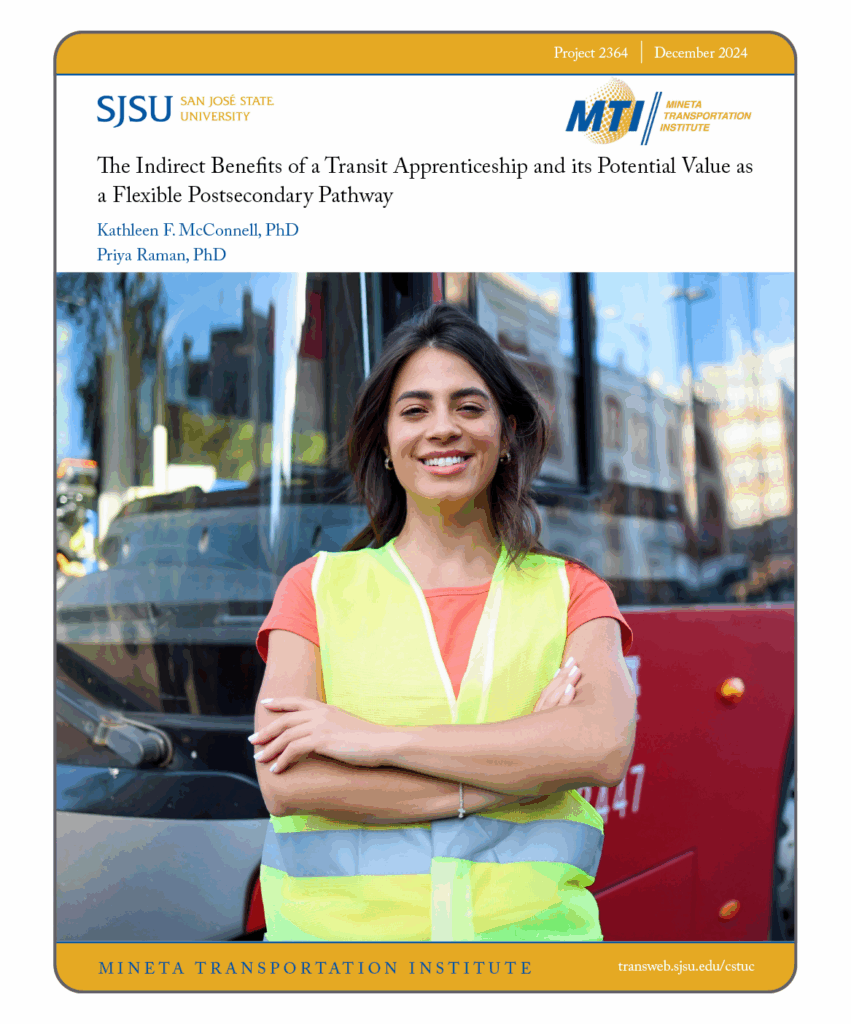
The Indirect Benefits of a Transit Apprenticeship and its Potential Value as a Flexible Postsecondary Pathway

As apprenticeships become more prevalent in the transit industry, they can also emphasize both technical and soft skills to invest in career advancement. This can attract young people to transit careers, which helps address challenges with recruitment and an aging workforce. Santa Clara Valley Transportation Authority’s Joint Workforce Initiative (JWI) employs this model by formally recognizing skills acquisition with accredited certificates. This study explores the JWI’s strengths within the revival of non-degree credentials fueled by efforts like the California Guided Pathways Program. Drawing on guidelines for connecting job training with degree programs, the study details the importance of affordability, portability, and articulation and outlines how these features could be further developed in the JWI.

Mineta Transportation Institute

December 2024

LEARN MORE
RESOURCE TYPE: | TRANSIT MODE:

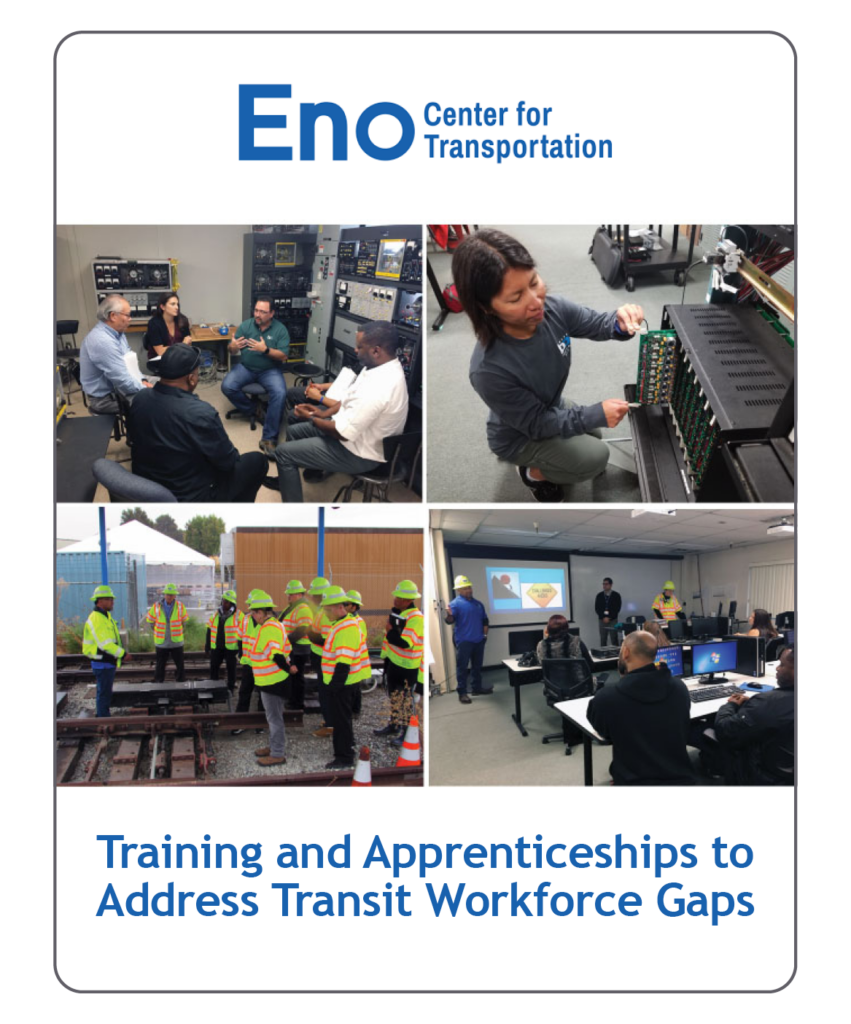
Training and Apprenticeships to Address Transit Workforce Gaps

This piece, penned by Jack Clark of the International Transportation Learning Center (ITLC), explores the role of training and apprenticeship programs in meeting workforce needs in transit, with a focus on operators. It discusses a few leading examples of apprenticeship programs in transit, as well as the role of mentorship in a strong apprenticeship program.

Eno Center for Transporation

August 2019

LEARN MORE