




 1-855-888-NTWC (6892)
 twc@transportcenter.org
Defining the Skilled Trades — A Data-Driven Blueprint for the Future
This report from Lightcast aims to address labor shortages in skilled trades by creating a clear definition of skills trade jobs, including a list a of trade occupations used by Lightcast, summarizing challenges and circumstances impacting skills trades, and providing strategies for public sector, private sector, and education.
Lightcast
August 2026


Building Pro-Worker AI
This report describes a framework which divides technological change into five categories depending on their impacts on labor. The paper defines pro-worker technologies as those that make human skills and expertise more valuable by expanding worker capabilities. The authors suggest several policy directions that could help make AI and other technologies beneficial as a collaborative tool for workers.
The Hamilton Project
February 2026
TOPICS: AI Preparedness , Career Pathways , Policy and Planning , Retention , Training
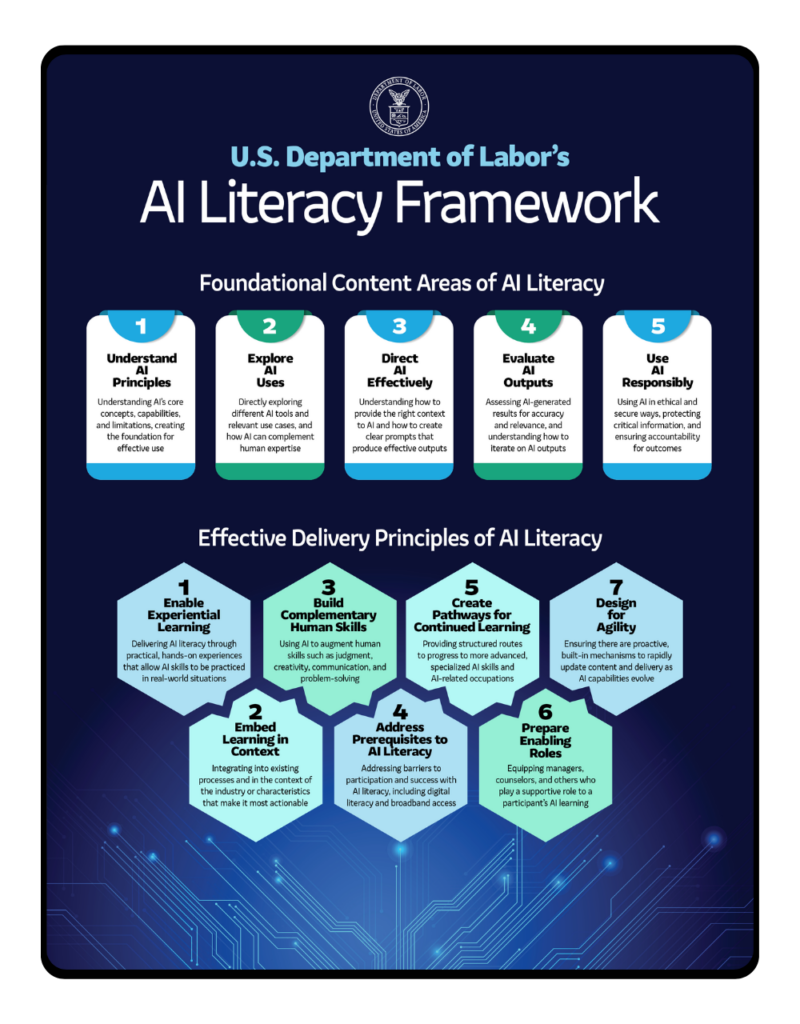
U.S. DOL AI Literacy Framework
This framework, published by the U.S. Department of Labor’s Employment and Training Administration, focuses on artificial intelligence literacy, providing a foundation to guide nationwide AI literacy efforts across workforce and education systems. The framework outlines five content areas and seven delivery principles for AI literacy and is intended to be a flexible and adaptable resource to guide program design and deployment of AI literacy efforts.
U.S. Department of Labor
February 2026
TOPICS: AI Preparedness , Policy and Planning , Training
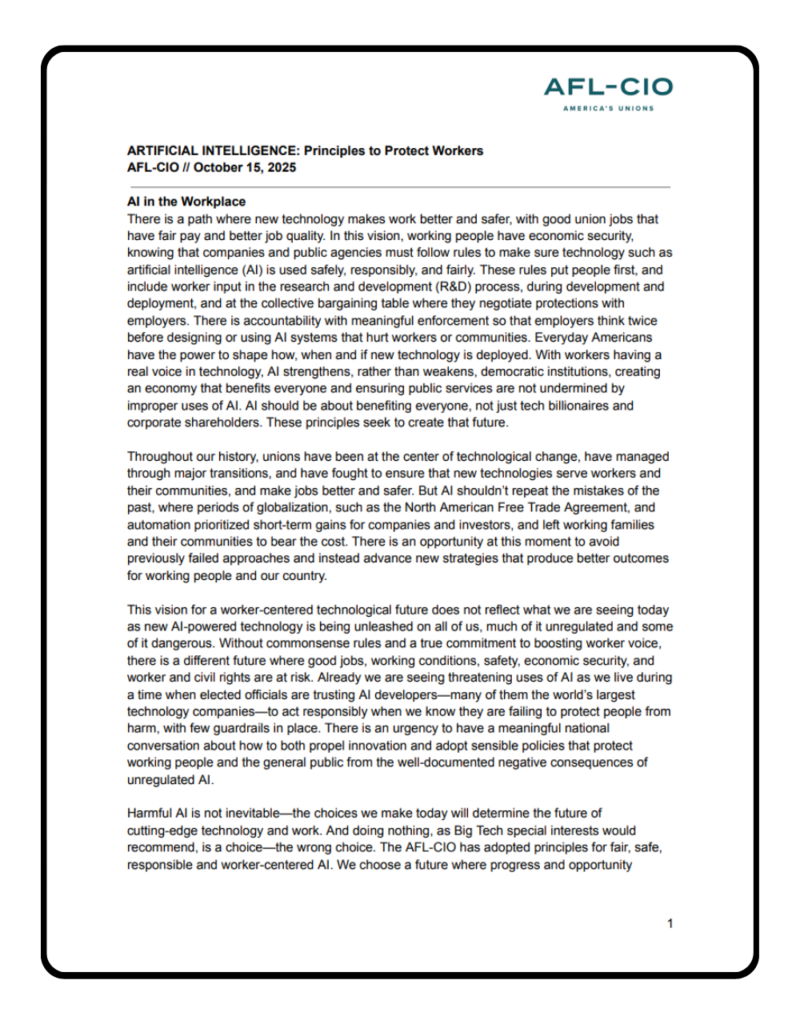
Artificial Intelligence: Principles to Protect Workers
This report from the AFL-CIO highlights the need for carefully incorporating AI into workplaces to protect workers and give workers a voice in its implementation. The report includes information about:
- strengthening labor rights,
- broadening opportunities for collective bargaining,
- advancing guardrails against harmful AI uses,
- promoting intellectual property protections,
- developing worker-centered workforce development and trainings,
- institutionalizing worker voice,
- requiring transparency,
- modeling best practices for AI use,
- and protecting workers’ civil rights.
AFL-CIO
October 2025
TOPICS: AI Preparedness , Policy and Planning
Fostering AI-Ready Building & Moving CTE Pipelines
This report explores how current and projected developments in AI are revolutionizing building and moving occupations, the potential exposure of building and moving occupations to AI-driven workforce automation, and how building and moving career and technical education providers can prepare their learners for a workplace increasingly shaped by AI technologies.
Advance CTE
March 2025
TOPICS: AI Preparedness , Career Pathways , Policy and Planning , Retention , Training
Making Connections 2024 – Integrating AI into Training Design and Development
This session about applications of artificial intelligence in training and development efforts was presented as part of TWC’s Making Connections 2024 transit workforce conference in November, 2024.
Transit Workforce Center
November 2024
Session Description: In this workshop, participants explored how Artificial Intelligence (AI) can revolutionize training and development efforts. We explored practical applications of AI throughout the ADDIE model and advanced usages of AI for helping trainers synthesize information from large datasets. Attendees also learned about the ethical considerations surrounding AI in training and how to effectively use AI tools by improving prompt engineering to craft content.
Moderator:
- Arnett Powell: Adjunct Instructional Designer – International Transportation Learning Center / Transit Workforce Center
Speakers:
- Addie Khanu: Instructional Designer – International Transportation Learning Center / Transit Workforce Center
- Jeff Pratt: Manager of Training – Bi-State Development/Metro Transit (St. Louis)
- Michael Tomlinson: Solution Architect – Xpan

The AI-Ready Workforce
JFF’s report “The AI Ready Workforce: How Leaders and Workers Can Prepare for a Reshaped Future of Work” describes research about AI’s impact on work and jobs, including effects on needed skills and tasks. The report provides three resources — a framework model, industry-specific profiles, and a readiness blueprint — to help workers and employers prepare for AI.
Jobs for the Future
November 2023
TOPICS: AI Preparedness , Policy and Planning
