



 1-855-888-NTWC (6892)
 twc@transportcenter.org
Heart of Iowa Regional Transit Agency (HIRTA)
Introduction
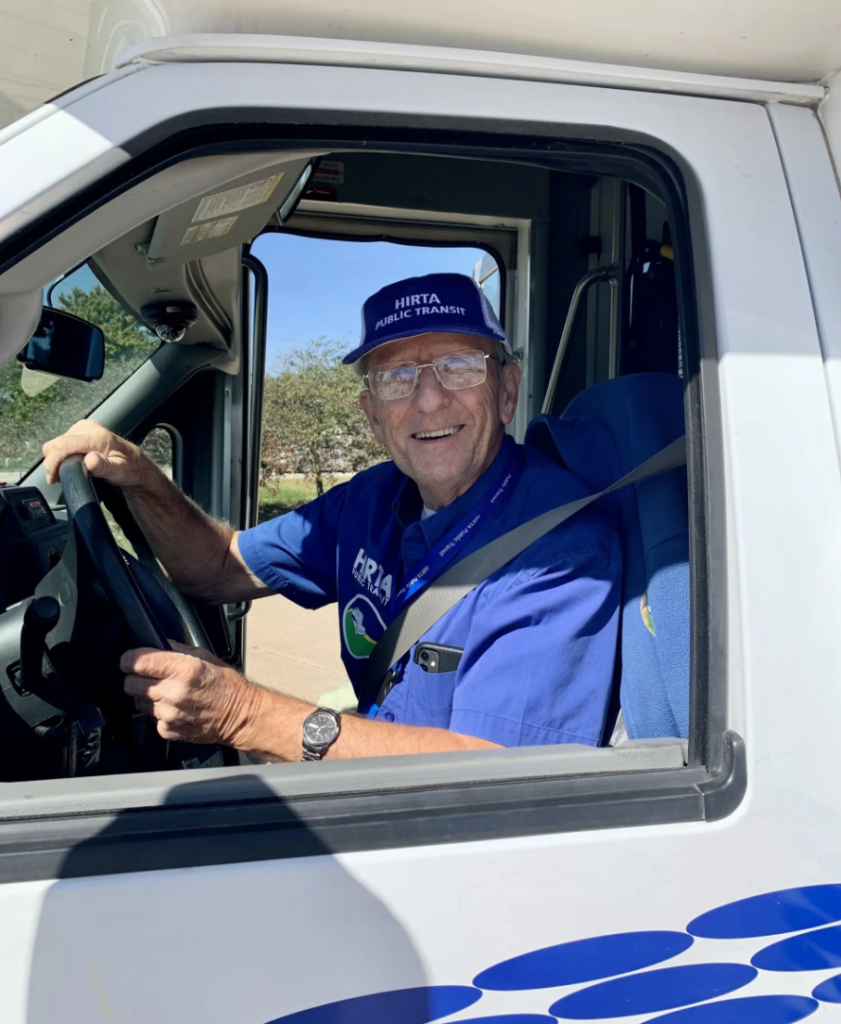
Heart of Iowa Regional Transit Agency (HIRTA) is a small urban transit agency serving a seven-county region in central Iowa. HIRTA operates demand responsive transportation with a fleet of 28 directly operated vehicles operated in maximum service and 63 operators. HIRTA’s leadership has implemented a variety of strategies to ensure robust recruitment and retention, including creating an efficient hiring process with minimal non-essential requirements and quick turn-around times. This mini-case study summarizes HIRTA’s process, highlighting key strategies intended to expedite hiring timelines and expand opportunities for applicants with non-traditional credentials or gaps in employment history.
Job Postings and Application
HIRTA’s operator job listings contain succinct information to ensure that potential applicants can quickly read the entire ad. The primary components listed are pay and job responsibilities. The initial application is also designed to be short, such that applicants can complete it in under five minutes. Applicants are asked to provide contact information, to indicate if they have relevant experience, and to list what type of license they have. Applications are screened to determine if candidates meet basic requirements; HIRTA prioritizes hiring individuals with CDLs but will also hire and train people who do not have CDLs.
Phone Screening and Interview
HIRTA’s operations manager conducts phone screens of qualified applicants, aiming to schedule these as quickly as possible after receiving an application. The phone screening is used to assess fit for the position through questions about what the applicant is looking for in a job and what customer service experience they have. Because the operations manager describes the job requirements in detail, some applicants will withdraw their applications after realizing that the job is not a good fit.
Applicants deemed eligible to advance are then invited to interview in person with the operations manager. The interview at HIRTA uses primarily scenario-based questions. Candidates whose responses are emotionally reactive or indicative of poor problem-solving abilities are not advanced in the process. Candidates who seem able to respond appropriately to challenging driving and customer service scenarios are then sent paperwork electronically to begin the background check process.
Pre-Employment Screenings
After contacting candidates whom they would like to hire and obtaining their consent to undergo the background check process, HIRTA staff submit the required materials and typically hear back with results within one to two days. Five years ago, HIRTA began to review non-violent offenses on a case-by-case basis. This has allowed HIRTA to hire strong candidates whose minor infractions do not affect their suitability for the role. The operations manager will run specific cases by the executive director in a timely fashion – the agency prefers to not “let things sit for days and days.” The agency has also simplified its prior-employment check process, focusing only on past CDL employment to collect information on prior failed or declined drug screenings (a legal requirement). This change has made the hiring process easier for candidates with prior work experience in industries like construction where employment history may appear less consistent than it actually is. HIRTA makes three attempts to contact prior CDL employers and will move ahead with the process if they are unable to get in touch.
After completing background checks and motor vehicle record checks, HIRTA schedules candidates for drug screenings and physical exams. Drug screening is conducted by a third party at one of several sites in the area. Finding candidates has become somewhat more difficult due to cannabis legalization and the lack of a reliable test of intoxication for cannabis.
The physical, or fit-for-duty test, is conducted at a local physical therapy office. HIRTA worked directly with the physical therapy office to identify all of the relevant physical requirements for operators and to design a test that adheres closely to these requirements. This creates a reliable record of initial physical health, protecting both the agency and the employee in the event of future medical claims
Onboarding and Training
HIRTA hires and trains on an ongoing basis, though it is preferable to have multiple hires at a time to begin training as a group. In some cases, the agency will ask new hires if they are willing to wait a few days to begin training with other candidates, which they typically are.
The training consists of a half day of onboarding followed by three days of classroom training. Candidates without a CDL will also begin hands-on driver training during this time; initially they are assigned to drive part-time routes using a Ford Transit van (which does not require a CDL) and continue CDL training on the side.
Contributing author: Doug Nevins
This page is part of TWC’s Streamlining Operator Hiring Practices research initiative aimed at documenting current transit agency hiring processes for operators and producing new resources to support agencies’ operator hiring efforts. Through background research, an industry survey, and interviews with 15 transit locations, the TWC research team has produced a series of fact sheets, briefs, and other resources focused on various aspects of the hiring process. Check out the initiative landing page to learn more about the project and to see the other resources.
