




 1-855-888-NTWC (6892)
 twc@transportcenter.org
Are Your Mentors Prepared for Their Role?
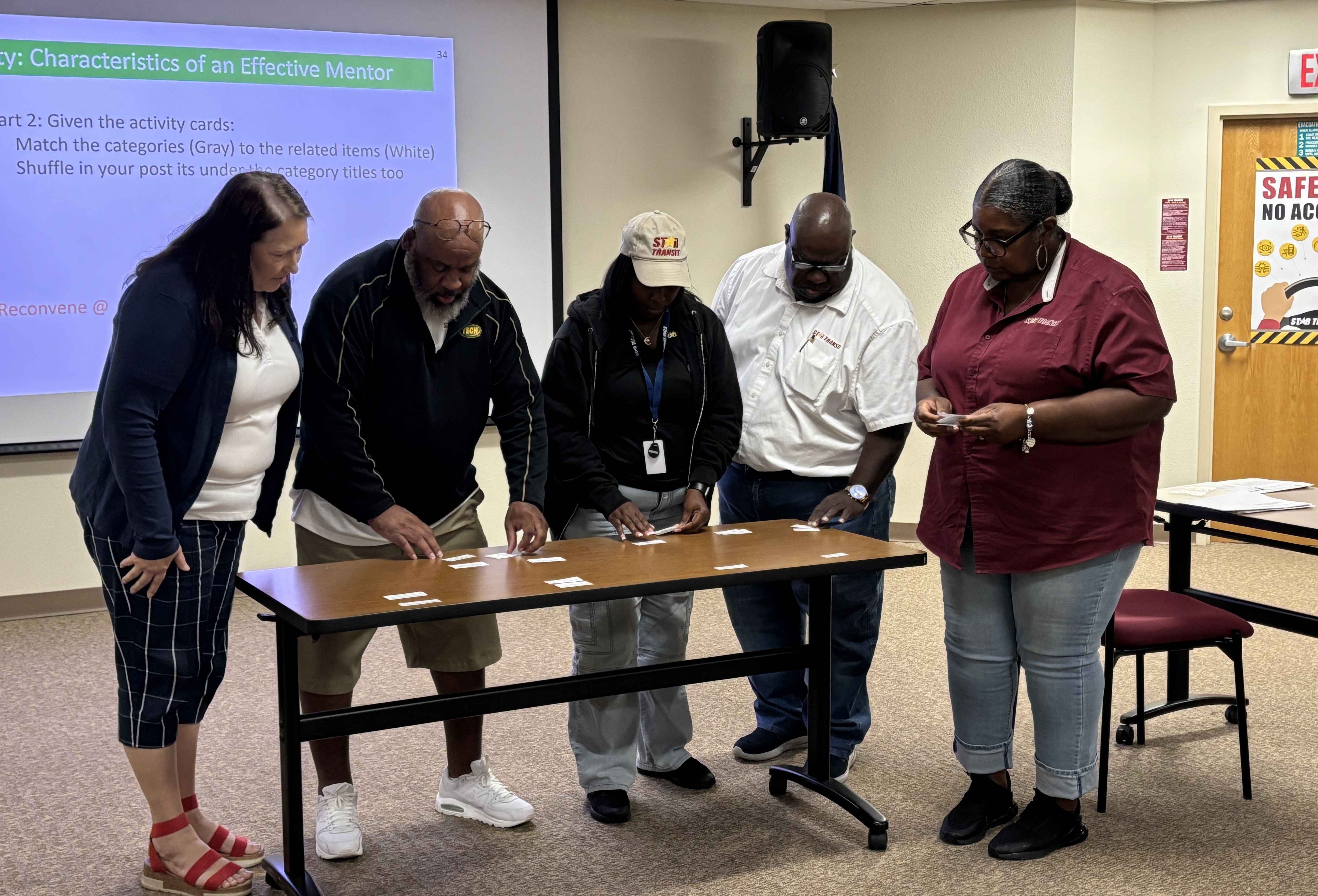
Peer-to-peer mentor programs have a proven track record, demonstrating improvements in areas such as retention, agency morale, and leading to positive changes in the overall workplace culture at transit agencies nationwide. TWC offers an 8-hour mentor development program, designed to provide mentors with an understanding of their role and equip them with the necessary tools to interact effectively with their mentees.
The program emphasizes several key areas essential to successful mentor programs and relationships, including adult learning styles, mentor roles and responsibilities, and appropriate boundaries. Although the general structure and topics covered in each session are similar, the approach is tailored to specific occupational and local contexts. Prior to scheduling a session, TWC can work with transit locations that do not yet have a program or have a program that needs refinement, so that it supports the success of mentors, their mentees, and the program as a whole. While various models exist, some key elements of transit frontline worker mentor programs are described below.
Transit Vehicle Operator Mentor Program:
Mentors are paired with mentees upon completion of the new operators’ training. Regardless of the quality or comprehensiveness of the new driver training, it can be a lot to absorb in a short amount of time. Additionally, the new driver has access to a resource for advice and support.
TWC’s Mentor Development Program for operators emphasizes how to provide effective guidance to new operators. This guidance helps new operators approach work/life balance issues, deal with challenging times or events, and pursue career growth and development.
Transit vehicle operator mentor programs should include:
- Mentor/mentee contact at agreed-upon intervals.
- Workforce involvement in the development and management of the program.
- Management of the program by a designated mentor program coordinator(s).
Many programs also include:
- Ride-alongs, where mentors join their mentees in service to provide tips on job performance.
- Mentor meetings so that mentors can share with, and learn from, other mentors.
- Branding, program name, and ways to provide recognition for mentors (patch, mentor uniform, etc.).
Maintenance Mentor Programs:
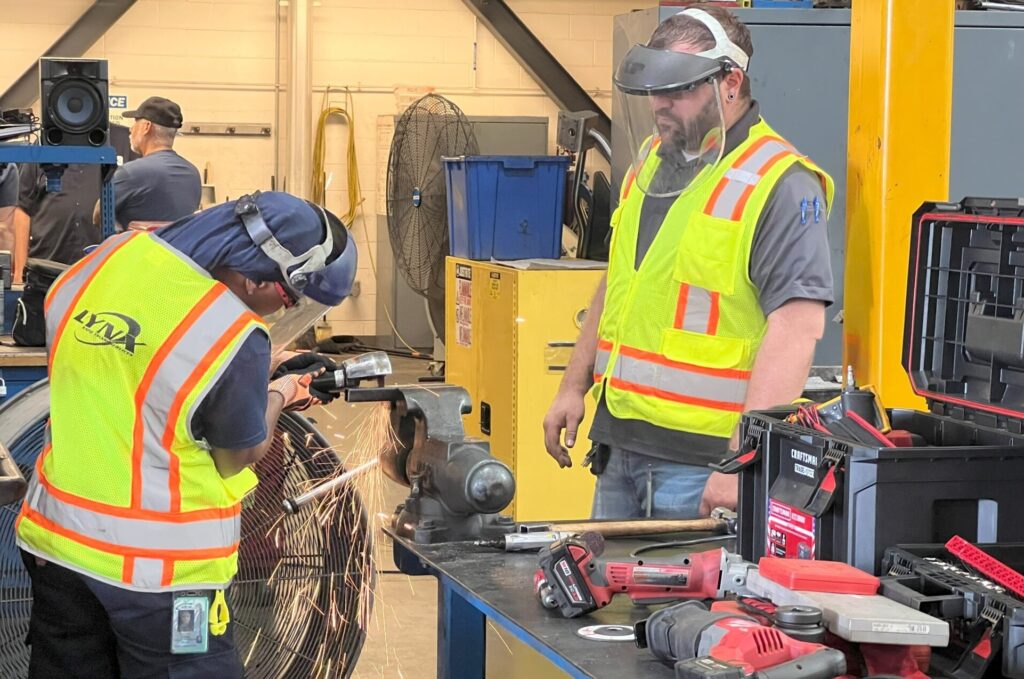
In maintenance mentor programs, skilled technicians are paired with employees to facilitate hands-on learning to pass on skills and maintain a safe work environment. Similar to operator mentor programs, elements can include meetings among mentors and program branding. Maintenance mentorship may be a stand-alone program but is often a part of a registered apprenticeship program. In this case, mentors help track the progress of apprentices as they move through the program.
TWC’s mentor development program is designed to provide an understanding of adult learning, how to provide both constructive and positive encouragement, and maintain well-defined boundaries that the hands-on, close relationship between maintenance mentors and their mentees requires.
Interested in Learning More? Check Out Our:
- Webinar on operator mentor programs
- Mentorship Metrics
- Apprenticeship FAQs
- Contact Karitsa Holdzkom or Maurice Beard
If you would like to request TWC’s mentor development program, please visit our webpage and fill out the request form.