



 1-855-888-NTWC (6892)
 twc@transportcenter.org
Working Together for Safer Transit: The Role of Joint Labor-Management Safety Committees
Under the Public Transportation Agency Safety Plans (PTASP) regulation, U.S. transit agencies and their frontline unions have formed safety committees comprised of equal numbers of labor and management representatives. This TWC brief explores strategies for effective labor-management collaboration on safety and opportunities for frontline worker training and upskilling facilitated by the joint committee structure.
Background
Prior research has indicated that partnerships and trust between management and union representatives can support key aspects of transit operations, including maintaining safety and mitigating risks. In TCRP Report 181: Labor–Management Partnerships for Public Transportation, researchers documented several benefits of partnerships, including increased trust and respect, more effective communication and cooperation, and “timely decision-making on critical operating issues,” all of which can impact the handling and resolution of safety-related concerns. The report summarized best practices for effective labor-management cooperation, including:
- outlining shared goals through organizing documents and charters;
- keeping partnership activities separate from dispute resolution processes;
- having clear expectations around roles, accountability mechanisms, and skill-building opportunities for participants in partnership activities; and
- determining a clear partnership governance structure.
A recent Harvard Business Review article on labor-management partnerships recommended engaging extensively with frontline workers to promote awareness and buy-in, as well as organizing training and capacity-building opportunities to support worker representatives’ co-facilitation of meetings and collaboration with management representatives on initiatives.
Labor-management partnerships have a role in promoting a healthy safety culture. In TCRP Report 245: Mental Health, Wellness, and Resilience for Transit System Workers, researchers found that “[although] an organization’s safety culture primarily involves its health and safety programs, organizations with good safety culture also demonstrate mutual trust and a shared perception of safety among all employees.” TCRP Report 174: Improving Safety Culture in Public Transportation identified key components of a healthy safety culture including an emphasis on safety from leadership, “employee/union shared ownership and participation,” and organizational trust.
Summary of research approach
Joint safety committees offer a key opportunity for labor and management to collaborate on safety issues and build trust. In 2025, TWC researchers met with labor and management representatives from four transit locations across the United States to discuss their experiences with PTASP joint safety committees. These locations were:
- Greater Cleveland Regional Transit Authority & Amalgamated Transit Union (ATU) Local 268
- Houston Metro & Transport Workers Union (TWU) Local 260
- Maryland Transit Administration & ATU Local 1300
- Southeastern Pennsylvania Transportation Authority & TWU Local 234
Key takeaways and strategies identified through these conversations are summarized below.
Summary of research findings
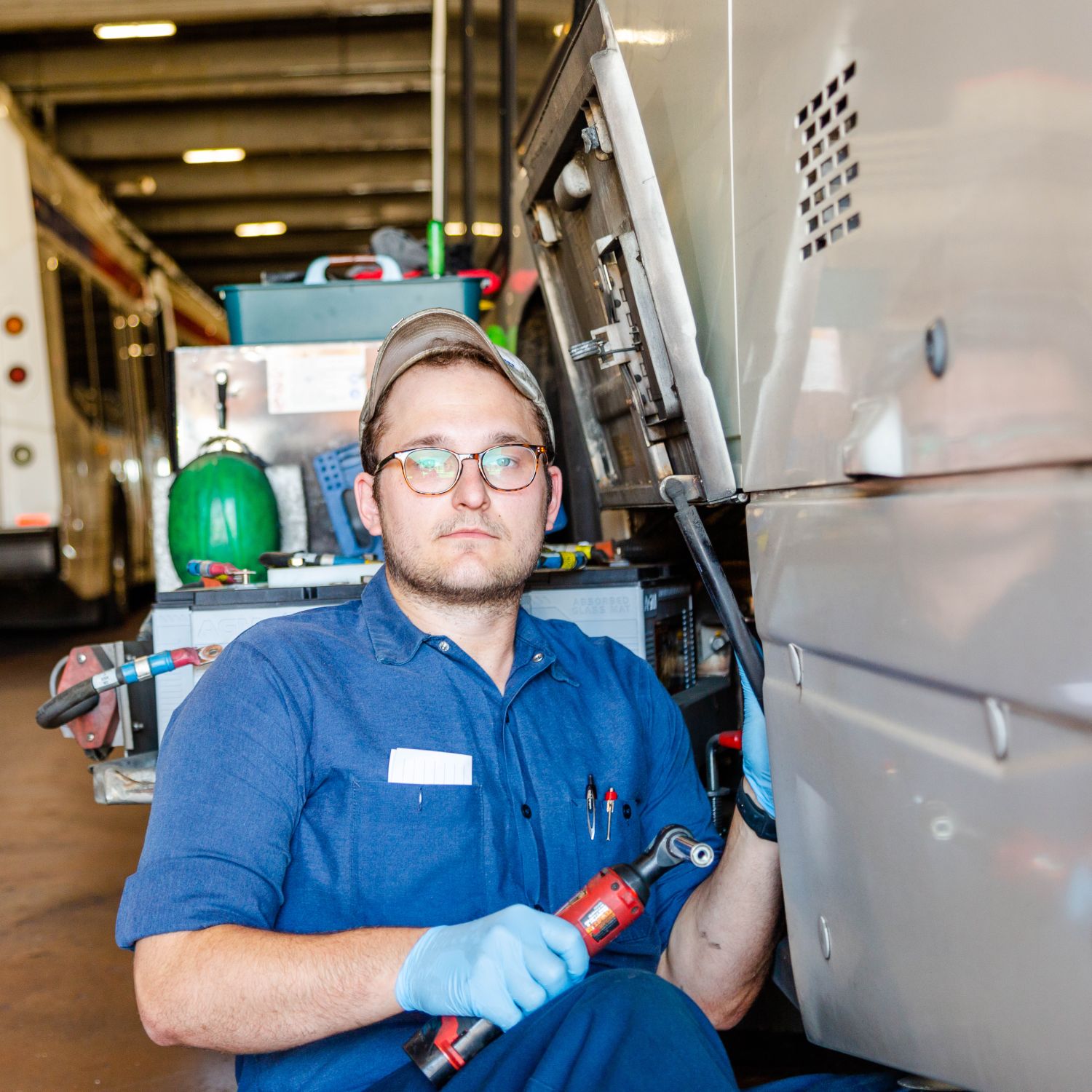
Across the four locations, representatives of transit agencies and frontline worker unions described the process of establishing joint labor-management safety committees as challenging but productive. All locations had undertaken a set-up process that included establishing a committee charter and identifying individuals from labor and management who were best suited to serve on the committees (with agency leadership and union local leadership respectively choosing their representatives). One agency official stated that, while in the first year of the joint safety committee the process consisted largely of committee review and approval of a draft PTASP, the process has shifted towards more active involvement by committee members throughout PTASP development. The labor and management representatives with whom TWC spoke indicated that the committee process had built trust and opened lines of communication, and that their agencies were beginning to adjust to the new PTASP process.
Committee structures and logistics
The locations that participated in the research varied in agency size and committee size, but their committees generally include 4-10 representatives each from labor and management, for a total committee size of 8-20 people. The rationale for committee size varied between locations. Some people we spoke with indicated that it is important that all major agency divisions are represented. One agency safety official indicated that their location had intentionally selected middle-management level employees and frontline workers as committee members; other locations have drawn membership predominantly from agency and union local leadership. In either model, representatives emphasized that engagement with frontline workers and across organizational levels is necessary for successful safety and risk mitigation processes, both through contact with the joint safety committee itself and through other channels including division-level and executive safety committees. Some locations were beginning to assess whether the committee size should increase over time and whether committee members should rotate out after a fixed term of involvement.
Committee meetings happen on a consistent schedule. PTASP plans and committee charters typically dictate a minimum meeting frequency, but some locations have more frequent meetings (in Cleveland, for example, the committee must meet at least quarterly, but in practice meets every other month).
Approaches differ as to what individual or body serves as a tie-breaking vote. One location that participated in conversations with TWC has designated the transit police as the tie-breaker. Selecting another entity can introduce a secondary layer of labor-management coordination – in the case of a law enforcement agency, it may be necessary to create a labor-management process for determining the tie-breaking vote. While selecting a tie-breaker was challenging for some locations, the four committees featured in this brief have largely not needed to use the tie-breaking mechanism, and some representatives of labor and management indicated that the process of working collaboratively to establish a viable tie-breaking process helped to build trust and capacity within the committees.
Building a Structure for Successful Collaboration – The Maryland Transit Administration and ATU Local 1300
The Maryland Transit Administration and ATU Local 1300 in Baltimore partnered to form a joint safety committee which began with six permanent members each and one alternate member each from labor and management and has gradually grown to ensure input from across the organization. As of summer 2025, the committee had nine management and nine frontline worker members, plus two alternates and a non-voting chair. ATU Local 1300 selects representatives from each of the agency’s seven divisions. Both management and union representatives interviewed for this brief indicated that it works best to appoint members based on interest in the committee’s mission and goals and a commitment to working towards solutions.
Developing robust Safety Management System (SMS) and risk mitigation skills has been a major focus of the committee. Committee members complete in-house SMS level 1 and 2 training and have access to Transportation Safety Institute (TSI) online courses. Shifting greater responsibility for risk mitigation to the committee was a challenge, as committee members did not all have experience or training, but the agency and union have worked to build knowledge and skills around identifying and prioritizing hazards.
Identifying a neutral entity to serve as the tie-breaking vote in instances of a deadlocked committee was also a challenge, but MTA and ATU Local 1300 representatives felt that formalizing the tie-breaking process was itself a productive enterprise, leading to stronger trust and working relationships. Ultimately the transit police were identified as a viable tiebreaker, and the police department subsequently developed its own internal labor-management process to decide upon a vote in instances where it is necessary.
MTA and Local 1300 representatives cited several successes related to the committee’s work. The committee has completed three safety plans without using its tie-breaking vote process. The committee has provided the frontline workforce with greater input on the vehicle procurement process, of which risk assessment is a required component. In addition, a new state law in Maryland designed to address the critical issue of transit assaults explicitly named the committee as a necessary partner in the development of the final policy and rules. The non-voting chair feels that the committee is a valuable mechanism for advancing safety and for growing the skills of committee members, who can potentially advance into safety management roles within the agency.
Safety committees as forums for workforce development and advancement
Our conversations with transit labor and management representatives indicated that safety committees provide avenues for skill development for the frontline workers and management employees serving as committee members, specifically through SMS training. TSI training is a common choice. While committee members in most locations complete SMS familiarization but not the full transit safety certification, one person we spoke with commented that once committee members are set up in the TSI system, it’s easier for them to pursue further TSI trainings. Still, there may be limitations to committee members participating in intensive trainings – one agency safety representative mentioned that, while it would be optimal for the committee to complete a rail accident investigation training, it was difficult to send the full group at the same time.
Conversations with labor and management representatives indicated that committee members are positioned to potentially move into safety-focused roles due to their committee experience. In one location, the committee process also led to the creation of five full-time safety positions for bargaining unit workers to partner with management safety officials to perform site visits in response to safety concerns.
Training-related initiatives have also been developed through the safety committees and codified in agencies’ PTASPs, such as a new de-escalation training program in Houston.
Safety initiatives
In addition to the creation of safety-focused roles and the implementation of de-escalation training, the locations whose representatives we spoke with have worked on safety and risk mitigation initiatives including:
- Operator barriers on buses in Philadelphia
- Procurement of new, better-ventilated personal protective equipment (PPE) for maintenance workers in Houston
- Improved lighting at bus layover locations
- Increased law enforcement presence on buses
- Sharing of data between labor and management (such as on the incidence and geography of fare violations and assaults)
- Implementation of a passenger ban and rider code of conduct in Baltimore, with the stipulation that the joint committee be involved in developing these
- Committee involvement in risk mitigation review, including during the bus procurement process
Engaging Frontline Representatives in Safety Efforts — Houston Metro and TWU Local 260
When Houston Metro and TWU Local 260 began their joint safety committee, they started with four mid-level management representatives and four frontline employees representing different roles: bus operator, rail, maintenance, and facilities. All committee members received basic SMS training as well as a five-day safety certification class to ensure the committee is knowledgeable about safety management practices and exposed to safety culture. To enable frontline employee participation, members are paid for time spent at meetings and provided free onsite parking on meeting days.
Houston Metro’s safety manager emphasized that the committee shouldn’t be treated like a box to check and must engage with both senior leadership and the frontline workforce. They have introduced the committee to Houston Metro’s board and facilitate meetings between executives and committee members at least twice a year to discuss committee activities. The committee members conduct visits to different garages and speak to operators and other frontline workers, ensuring that they aren’t missing any important topics. Frontline workers can also use QR codes in their facilities to communicate with the committee.
Agency and union leadership agreed that frontline worker input has made a difference, leading to several policy and practice changes since the committee’s formation. Houston Metro has introduced bus operator compartment barriers, an undercover security presence on buses, and de-escalation training to mitigate and prevent assaults on workers. For maintenance shops, the committee addressed concerns about outdated respirators and committed to getting new models in all facilities, with input from maintenance workers and union local representatives on the procurement process.
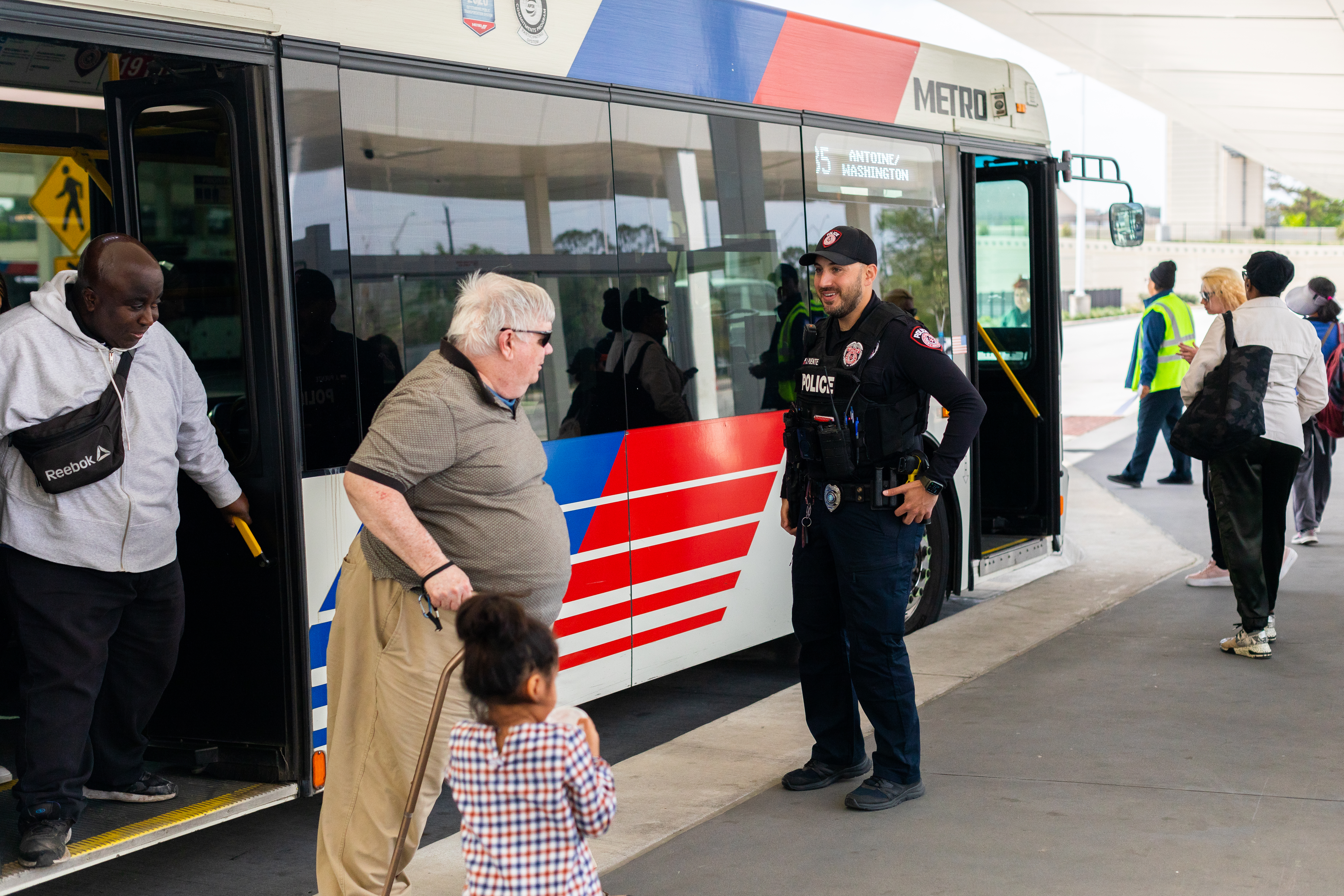
Photo credit: Houston Metro
Success factors
Based on our conversations, several strategies that contribute to joint safety committee success were identified:
- As mentioned previously, committee size and meeting frequency can vary, but the people we spoke with agreed that it is beneficial to be intentional about these considerations.
- The selection of committee members can be a factor in smooth committee operations. While there is no one-size-fits-all approach, some people indicated committee members should represent different divisions and be at a level of seniority that is not too far removed from daily operations. Committee members have also been chosen based on interest in safety issues and perceived fit for the responsibilities of committee activities.
- Ensuring visibility of the safety committee throughout the agency was mentioned multiple times as an important strategy. This can involve introducing the committee members to the agency’s board and senior executives and visiting specific divisions and garages, as well as posting information about the committee in workspaces.
- Joint safety committees can function as a complement to divisional safety committees, which can respond to frontline worker concerns in a timely manner, develop solutions, and escalate critical issues and risks as needed.
- Several locations whose representatives we spoke with have adopted specific strategies to facilitate consistent participation by frontline worker representatives. These can include:
- Scheduling meetings far in advance and/or clearly communicating a meeting schedule for the whole year
- Conducting meetings in a hybrid format
- Non-voting safety officials communicating to frontline supervisors that committee members’ participation is not optional, and ensuring that work schedules do not interfere with committee activities
- In one location, frontline workers on the committee were given parking passes for a lot typically used only by non-bargaining unit workers, to make it easier to attend meetings at the agency’s downtown office
Contributing authors: Doug Nevins, Michaela Boneva
